Portrait of a Young Woman (No. 556)
Found in Fayum, this portrait of a woman dates back to the Roman Period (end of the first century AD). A great corpus of portraits painted on wood known as the "Fayum portraits" and plaster masks was made during the Roman imperial era. The Roman taste had a particular interest in making portraits that stand for iconographic realism. Such a tendency became the most successful expression of the reciprocal penetration of Egyptian and Roman cultures that were far more integrated in death than in life. While plaster masks were placed on the mummy over the area of the face, portraits were either placed among the bandages wrapping the deceased's mummy or on the linen shrouds.
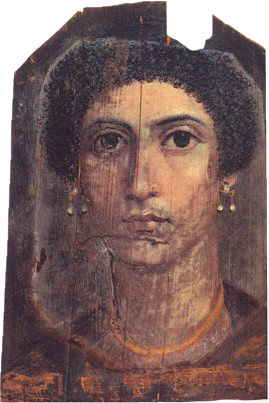
With masterly, this example of the Fayum portraits is an encaustic painting made on wood. It depicts details of the face of an elegant aristocratic young woman. This is evidenced from the woman's most impressive facial expressions, elegant chignon with symmetrical ringlets, and her upright posture. Skillfully portrayed are the portions of each detail of the lady's face. Hanging down from her long, graceful, and smooth neck is a gold choker with a pendant of high taste. Both the slender eyebrows and the large beautiful eyes add to the lady's charm. Hanging from her ears are two U-shaped earrings.
Facts
- Material: Encaustic Painting on Wood
- Size: height 31 cm, width 22 cm
- Found in: Fayum
- Period: Roman Period
- Museum: Egyptian Museum, Cairo

Registration successfull!

Your Registration is successfully done
Please Check Your E-mail to Confirm Your Account. Do not forget to open the spam folder.
 EUR


 Español
 English
 العربيه


