Portrait of a Man
This portrait with the face of a man dates back to the Roman Period (early 3rd century AD). A great corpus of portraits painted on wood known as the "Fayum portraits" and plaster masks was made during the Roman imperial era. The Roman taste had a particular interest in making portraits that stand for iconographic realism. Such a tendency became the most successful expression of the reciprocal penetration of Egyptian and Roman cultures that were far more integrated in death than in life. While plaster masks were placed on the mummy over the area of the face, portraits were either placed among the bandages wrapping the deceased's mummy or on the linen shrouds.
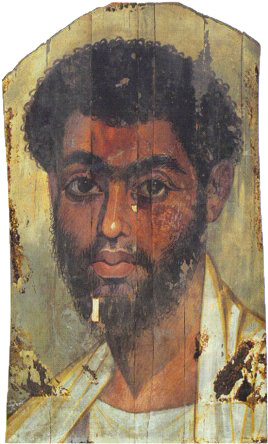
This example of encaustic Fayum portraits on wood denotes a high taste of decoration and a skillfully-organized color arrangement. A blend of tempera and encaustic painting was not quite common at that time; but it proved successful at this portrait. With delicate tones, the face portrayed shows in detail the most expressive African facial features of a man with a dark skin. It is skillfully framed with curly black hair over the head as well as trimmed beard and mustache. A scarf (and no longer the Pharaonic wig) encircles the young man's neck. The graceful color contrast made with the pale gray background with the black hair and white garment adds to the beauty of the young man's portraiture.
Facts
- Material: Encaustic Painting and Tempera on Wood
- Size: height 39.5 cm, width 23 cm
- Period: Roman Period
- Museum: Egyptian Museum, Cairo

Registration successfull!

Your Registration is successfully done
Please Check Your E-mail to Confirm Your Account. Do not forget to open the spam folder.
 EUR


 Español
 English
 العربيه


