The Community of Craftsmen and Workers

Studies were carried out on the organization of this worker's village , one of the rare urban structures known today in Egypt , and of the tombs in the necropolis , as well as an Epigraphic analysis of the elements found in the course of the excavation , among which , there are numerous ostraca (pieces of pottery) and limestone fragments containing sketches of notes or annotations that have made possible a detailed reconstruction , not only of the way of life in the settlement , but also the social and industrial organizations of these workers of Tuthmosis I , whose name is stamped on the mud bricks of the wall that surrounded the 1st community .
We have little evidence about the village in the 18th dynasty , It seems that , it did not take up the entire area behind the wall , but that there was some open space for the village animals such as cattle .
The 1st village was destroyed by fire , possibly during the Amarna Period , and during the reign of Hormoheb the village seems to have been reorganized . The village expanded to the south and the west and spilled out over the wall of Tuthmosis I , a new stone-wall was built to enclose the suburbs . Still the village grew and new quarters sprang up outside the enlarged wall , It contained seventy houses while another forty or fifty lay outside the wall .
Founded at the beginning of the New Kingdom , the village was a fully-fledged official institution placed under the authority of the vizier , and almost certainly dates back to king Amenhotep I , as suggested by the special cult to him and his mother Ahmose-Nefertari practiced by the inhabitants of Setmaat .
In fact , up to the end of the Ramesside period , both of them were considered the patrons of the community and were depicted in the decorations , in the village burial ground , as divinities venerated under specific aspects .
The patron goddess was goddess Meretseger , beloved of silence depicted in the form of a cobra , placed in charge of protecting the necropolis at Thebes .


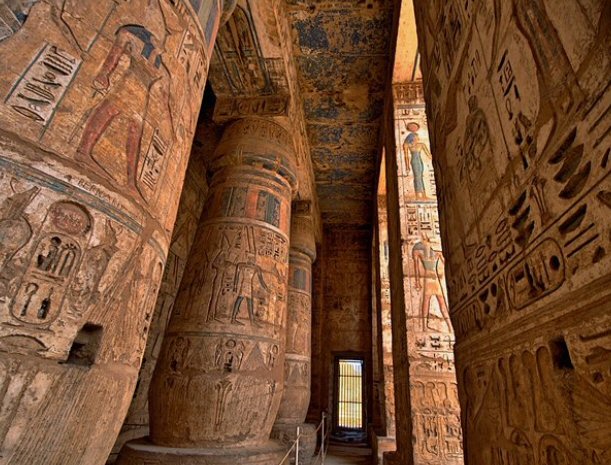
The bases of Deir El Madina, at the archeological site of the Western Bank, Luxor


Sightseeing in Deir Al Madina
Attractions, monuments, temples, restaurants, museums, sqaures, archelogical sites, and more in Deir Al Madina   >>

All Attractions of Deir Al Madina
A list of all attractions and monuemnts in Deir Al Madina   >>

Photo Gallery for Deir Al Madina
A nice photo gallery of special photos and photos sent by users about Deir Al Madina   >>