Wooden Sarcophagus
This wooden sarcophagus was found in the Serapeum at Saqqara and was identified to date back to the Greco-Roman Period (332 BC-3D AD (. In ancient Egypt, the funeral receptacles can be divided into two main types: the coffins and sarcophagi. Housing the deceased's coffin, the sarcophagus was invented as early as early the Old Kingdom, beginning from the Third Dynasty, in the reign of Djoser. Sarcophagi were made out of stone, such as alabaster, granite, or limestone. However, the sarcophagi did not have as much inscriptions as coffins. Instead, they were inscribed merely with the name and titles of the deceased. There are two major functions of the sarcophagus: it was intended to protect the body of the deceased from being destroyed; and was considered the house of eternity where the KA should reside till the afterlife.
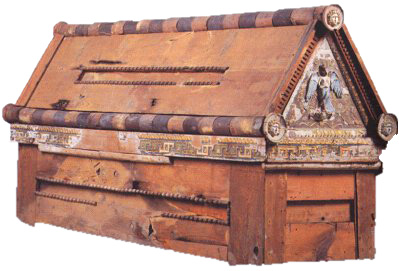
Made from sycamore, this sarcophagus was masterly decorated with polychrome terracotta. The four outer sides contain rectangular carving with a series of decoration around the rims. Ancient Egyptians thought of the lid of a sarcophagus as the sky; the bottom as the earth; and the four sides as the four horizons. Here, a pin fastens the upper triangle part all together; and when it is removed, the lid opens. At one side, there are three pateras with the head of Medusa, a chthonic female monster; gazing upon whom would turn onlookers to stone. Most admired is the siren freely spreading her green-blue wings.
Facts
- Material: Sycamore and Polychrome Terracotta
- Size: height 94 cm, width 57 cm
- Found in: Serapeum at Saqqara
- Period: Greco-Roman Period
- Museum: Egyptian Museum, Cairo

Registration successfull!

Your Registration is successfully done
Please Check Your E-mail to Confirm Your Account. Do not forget to open the spam folder.
 EUR


 Español
 English
 العربيه


