Statue of the Goddess Maat
This well-preserved statue of goddess Maat dates back to the Ptolemaic Period (305-30 BC). In the ancient Egyptian mythology, Maat is one of the goddesses that was regarded as a symbol of wisdom and justice and other moral values that help mankind to live properly. The usual depiction of her shows her as a woman with an ankh and scepter in her hand and an ostrich feather over her head. This feather represents her gentleness, extreme beauty, and sound judgment. She was a member of the underworld court and therefore the symbol for truth and straightness and a personification of all what is right, just and ideal. She was present in the "weighing of the heart" at the court of Osiris. At this divine judgment, if the heart was as light as Maat (who was put on the other end of the scale), the deceased was blessed to enter the world of the dead. She is a symbol for order since she is credited to maintaining stability on the surface of earth since the creation of the world.
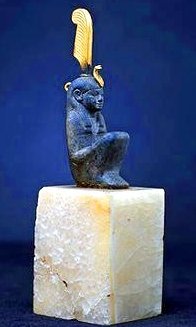
Made of fine gold and lapis lazuli, this statue of the goddess shows her crouching on a large marble square base. Invisible are the faithful carvings of the details of her arms and legs; and accordingly her fingers. Over her head she wears a triple wig smoothly set. The golden ring on the back of her head indicates that the statue was used as a pendant or amulet that was thought to provide a certain kind of protection or guidance. Over her forehead appears a gold uraeus serpent, symbol of protection against evil influences. A fine tall ostrich feather tops her wig, granting her an air of solemnity, wisdom, and beauty. The fine contrast of colors attributes to the high value of the artistic statue of the beautiful goddess.
Facts
- Material: Lapis Lazuli and Gold
- Size: height 7.2 cm
- Period: Ptolemaic Period
- Museum: Egyptian Museum, Cairo
Related

Registration successfull!

Your Registration is successfully done
Please Check Your E-mail to Confirm Your Account. Do not forget to open the spam folder.
 EUR


 Español
 English
 العربيه


