Statuette of Harpocrates
Dating back to the Ptolemaic Period (305-30 BC), this bronze statue was a gift from King Farouk (1937). It represents god Harpocrates ("Horus the Child") and the god of science in the Greek mythology. This statue witnesses the religious syncretism that characterized the Ptolemaic Era. This entailed a blending of two or more religious belief systems into a new system, or the incorporation into a religious tradition of beliefs from unrelated traditions. The figure is the god Somtus (¬a form of Harpocrates) ¬who was assimilated to Herishef, the god-ram of Herakleopolis Magna who was associated with Heracles from the start of the Ptolemaic Period.
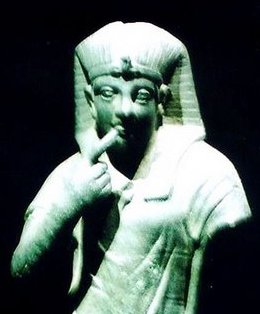
The statue pictures the god with one long braid (now missing) near his right ear. Dressed in the Greek tunic, he wears a nemes (Pharaonic headdress) topped with a uraeus serpant putting his finger close to his mouth as a symbol of childhood.
Facts
- Material: Bronze
- Size: height 26.7 cm
- Period: Ptolemaic Period
- Museum: Egyptian Museum, Cairo
Related

Registration successfull!

Your Registration is successfully done
Please Check Your E-mail to Confirm Your Account. Do not forget to open the spam folder.
 EUR


 Español
 English
 العربيه


