Statue of a Ptolemaic King
This statue is a good example for the influence of Pharaonic art on the Greco-Roman art. This appears clearly in the depiction of the emperor in the typical posture of ancient Egyptian pharaohs but with roman facial features.
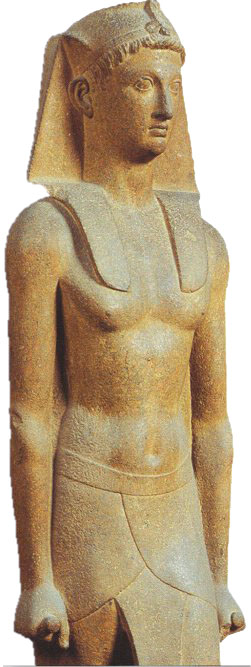
The king is portrayed wearing a plain shendit and nemes over his head with uraeus serpent over the forehead as a symbol for royalty. He is advanced with his left leg a step forward while his arms are by his sides. The king is portrayed with Macedonian facial features of the oval face with wide forehead, long and slender nose, thin lips, and protruding cheekbones.
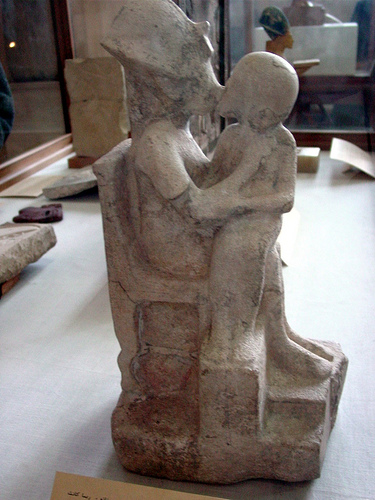
The standing figure with his left leg advanced and arms rigidly held down by his sides is portrayed in the traditional pose of Egyptian male statuary. All these features in addition to the curly hair that escape from the nemes mark what is known as the Hellenistic art.
Facts
- Material: Granite
- Size: height 280 CM cm
- Found in: Karnak
- Period: The Greco-Roman period
- Museum: Egyptian Museum, Cairo

Registration successfull!

Your Registration is successfully done
Please Check Your E-mail to Confirm Your Account. Do not forget to open the spam folder.
 EUR


 Español
 English
 العربيه


