Censer in the Shape of an Arm
This censer was found in Medinet Dimai, in El Fayoum and was identified to date back to the Ptolemaic Period (the end of the 4th century BC). Ancient Egyptians associated favorable smells with the gods and recognized their positive effect on health and well being. Incense was formed into small pellets and burned in temples during religious ceremonies and in tombs during funerary rites with the purpose to bring the god (or a dead man) back to life. Many types of incense had to be imported Punt; and walls of the Mortuary Temple of Hatshepsut at Deir el-Bahri recorded a trading expedition to Punt that delivered aromatic woods and spices for the creation of incense and perfume.
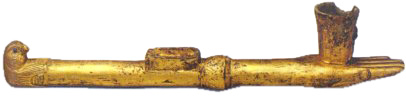
Made of gilded wood, the censer was modeled into an arm that carries a small container decorated with a uraeus serpent in which the incense was burned. It ends with a head of a falcon; and it has a small container in the center in the form of a cartouche.
Facts
- Material: Gilded Wood
- Found in: Medinet Dimai, El Fayoum, 1893
- Period: Ptolemaic Period
- Museum: Egyptian Museum, Cairo

Registration successfull!

Your Registration is successfully done
Please Check Your E-mail to Confirm Your Account. Do not forget to open the spam folder.
 EUR


 Español
 English
 العربيه


