Sarcophagus of Neferi
The sarcophagus of Neferi was found in his tomb among the Middle Kingdom tombs at al-Bersha, in the middle of the country. Archeologists found a great corpus of grave goods as well as sarcophaguses still housing mummies inside this necropolis. In ancient Egypt, the funeral receptacles can be divided into two main types: the coffins and sarcophagi. Housing the deceased's coffin, the sarcophagus was invented as early as early the Old Kingdom, beginning from the Third Dynasty, in the reign of Djoser. Sarcophagi were made out of stone, such as alabaster, granite, or limestone.
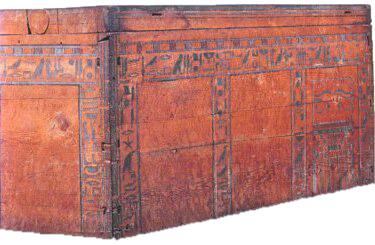
Beside this sarcophagus, the tomb of Neferi (who lived during the Twelfth Dynasty) also contained some canopic jars, fragments of boats a well as some parts of furnishings. Made from painted wood, this example of double rectangular sarcophaguses housed the mummy of Neferi and some wooden items. The east side of the sarcophagus at the height of the head is decorated with two large Wedjat eyes to symbolize the potential participation of the deceased in the solar cycle and to permit the deceased contact with the world of the living. From inside, it is decorated with rows of hieroglyphs and Sarcophagus Texts with the formula of the funerary offerings and placing the deceased under the protection of a number of deities. Also decorating the sarcophagus are depictions of protective deities such as: Osiris, Thoth, Geb, Anubis, Nephthys and Nut, Isis and Tefnet.
Facts
- Material: Painted Wood
- Size: height 104 cm, width 99 cm
- Found in: Al-bersha, Tomb of Neferi Nefiri, 1897
- Discovered by: The Egyptian Antlquities Service
- Belonged to: Neferi
- Dynasty: 12th Dynasty
- Period: Middle Kingdom
- Museum: Egyptian Museum, Cairo
Related

Registration successfull!

Your Registration is successfully done
Please Check Your E-mail to Confirm Your Account. Do not forget to open the spam folder.
 EUR


 Español
 English
 العربيه


