Osiris
In Ancient Egyptian Mythology, Osiris was regarded as the chief god of the Netherworld who has the power of resurrection and fertility. Osiris is the eldest son of Nut and Geb; the husband of Isis; and the father of Horus the younger. Egyptians believed he was the god of the Hereafter who states the final judgment on the dead souls. Ancient Egyptians used to take good core and pay full attention to announce their attachment to truth and justice, and the reduction of making those faults that upsets their gods. They used to think that they would be judged on all their actions, and that there would be a court for such judgment that would find them either innocent or quality. In these trials, god Anubis was thought to be Osiris' assistant who was in charge of preparing the body before standing in his hands. The Book of the Dead described Osiris as the lord of immortality, the heir of the North and South of the earth, the prince of gods and humans, and the Lord of Mendes and ruler in Abydos.
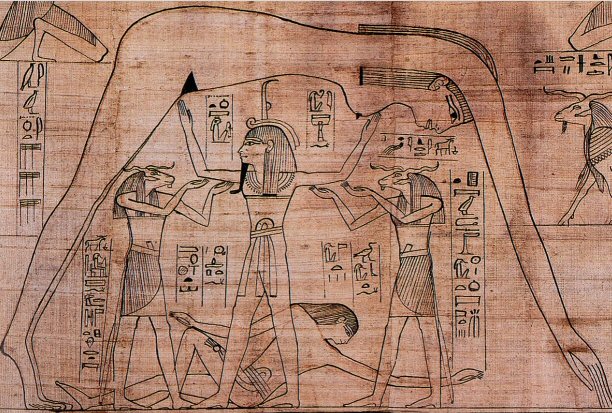
The usual depiction of Osiris shows him as a man wearing a beard, catching a crook and a flail in his hand and wearing the Mummy's white dress, and with a white crown of Lower Egypt and some times a white crown and two plumes over his head. Most of the scenes that depict Osiris present him topping the throne of Maat or setting on a throne floating on water. Osiris was worshiped in several temples and his statue appears in the drawings on the walls of Upper Egypt temples such as the temples of Dendera and Philae.

Registration successfull!

Your Registration is successfully done
Please Check Your E-mail to Confirm Your Account. Do not forget to open the spam folder.
 EUR


 Español
 English
 العربيه


