Mummy of Thutmosis II
This mummy belongs to Pharaoh Tuthmosis II (Thutmosis II), the fourth king of the Eighteenth Dynasty who met his death in 1479 BC. Depending on the realization that every thing after death came to life again, the Ancient Egyptians hold the belief that there is a life after death and therefore the mummification of dead bodies was inevitable. Notably, mummification symbolizes the fear of the Ancient Egyptians had of death and answers their eager desire for immortality. Such elaborate burial practices of Ancient Egyptians suggest that the Egyptians began early to make plans for their death out of their great love of life.
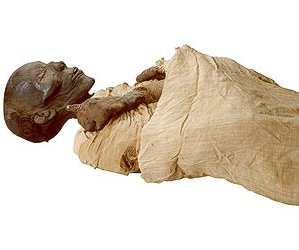
This particular mummy was found in 1881 hidden with other royal mummies with no grave goods in the cachette at Deir al Bahari (in Luxor) in a sarcophagus with a label that recorded its removal in the 6th year of the reign of Smendes, the first king of the Twenty-first Dynasty. At the end of the Twentieth Dynasty, the royal necropolises in the Valley of the Kings were no longer the burial places of the pharaohs. This was because with the increase of tomb robberies, it was much safer to the bodies of the deceased kings to be placed hidden in the cachette at Deir al-Bahari (DB 320) or in the tomb of Amenhotep II in the Valley of the Kings. This may explain why archeologists are still unable to identify the original burial place of Tuthmosis II. This pharaoh reigned for only three years.
Facts
- Material: Mummy
- Found in: The Cachette in Deir Al-bahari, 1881
- Discovered by: The Egyptian Antlquities Service
- Belonged to: Thutmosis II
- Reign of: Thutmosis II
- Dynasty: 18th Dynasty
- Period: New Kingdom
- Museum: Egyptian Museum, Cairo
Related

Registration successfull!

Your Registration is successfully done
Please Check Your E-mail to Confirm Your Account. Do not forget to open the spam folder.
 EUR


 Español
 English
 العربيه


