Statue of Isis, Statue of Hathor protecting Psametik, and Statue of Osiris
Psammetik was the chief scribe, superintendent of the seals and governor of the palace at Saqqara in the 26th Dynasty. The tomb of Psammetik was discovered in Saqqara and there were numerous praiseworthy statues with in including the seated statue of Isis and Osiris and the Statue of Hathor in the form of a cow.
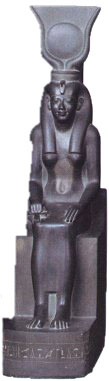
Isis statue presents her sitting on a footstool throne with Hathor wig over her head and her hands folded at her legs. Isis is portrayed wearing a long tight-fitting tunic, three-part long and smooth wig topped with two horns and the solar disk in between and the uraeus serpent on her forehead. The goddess is shown with delicate facial features and quite smiling face. The lower base of the statue is adorned with some hieroglyphic inscriptions indicating a funerary formula requesting the god care and protection for the ka of the deceased in the hereafter.
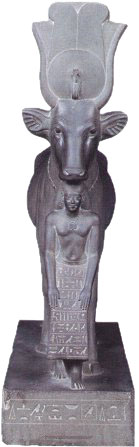
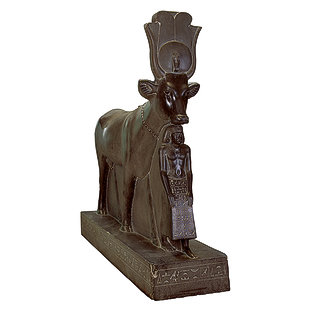
The statue of Hathor Protecting Psammetik is another fascinating piece that was discovered in the Tomb of Psammetik in Saqqara. This is a typical style of sculpture that appeared in the New Kingdom where Hathor is shown in the form of a cow with the usual crown of Hathor that comprises of the two horns and the solar disk in addition to the two plums over it. Around the neck of the powerful cow appears a necklace with a pendent in the form of a seal or cartouche, symbol for the king. The pendent of the necklace in Psammetik tomb is a statue for the king whose shendit is decorated with some hieroglyphic inscriptions indicating a prayer from the king to Hathor.
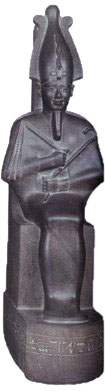
Of Special interest in the Tomb of Psammetik is Osiris statue that was placed next to Isis Seated Statue. This granite statue shows Osiris with his Atef crown and the mummy clothes sitting on the throne. Osiris is portrayed in his customary posture with his hands folded to his chest while holding the flail and the scepter in his hands. The crown of Osiris consists of the white crown of Upper Egypt with two plums on its sides and a copra in the forehead of the king as a symbol for royal power and dignity. Osiris is depicted with delicate facial features and slightly smiling mouth and a pointed sacred beard as a sign for majesty.
Facts
- Material: Schist
- Found in: Saqqara, Tomb of the Scribe Psammtik, 1863
- Discovered by: A. Mariette
- Belonged to: Psametik
- Dynasty: 26th Dynasty
- Period: The Third Intermediate Period And The Late Period
- Museum: Egyptian Museum, Cairo
Related

Registration successfull!

Your Registration is successfully done
Please Check Your E-mail to Confirm Your Account. Do not forget to open the spam folder.
 EUR


 Español
 English
 العربيه


