Sarcophagus of the Lady Aset
This sarcophagus was found among the grave goods in the untouched Tomb of Sennedjem in Deir al Medina, the settlement of the builders and craftsmen that undertook the construction works on the royal tombs in the Valley of the Kings. Found in 1886, it was identified to date back to the Nineteenth Dynasty, during the reign of King Ramesses II (1279-1212 BC). This sarcophagus belongs to one of the members of the family of Sennedjem, one of the necropolis workers who were responsible for building and decorating royal underground tombs in the Valley of the Kings. It belongs to Aset, the wife Sennedjem's son, Khabekhent (also a craftsman).
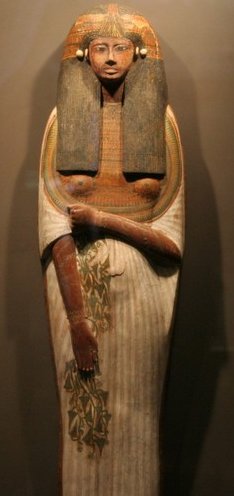
This particular receptacle is made from wood covered with cloth, lined with stucco then varnished. The lady is pictured wearing a long transparent and pleated tunic made from linen. Affected by the naturalistic philosophy of the Amarna Period, the lady is portrayed as a living woman rather than a mummy. She holds branches of lotus plant at either hand. Hanging down from the neck is a broad shoulder-to-shoulder necklace known as the 'usekh collar' decorated with multiple strings. She wears graceful accessories of high taste on her fingers, arms, and ears.
Facts
- Material: Wood Covered with Cloth, Lined with Stucco and Varnished
- Size: height 193.5 cm, width 47 cm
- Found in: Deir Al-medina, Tomb of Sennedjem, 1886
- Discovered by: The Egyptian Antlquities Service
- Belonged to: Aset
- Reign of: Ramsses II
- Dynasty: 19th Dynasty
- Period: New Kingdom
- Museum: Egyptian Museum, Cairo
Related

Registration successfull!

Your Registration is successfully done
Please Check Your E-mail to Confirm Your Account. Do not forget to open the spam folder.
 EUR


 Español
 English
 العربيه


