Sarcophagus of Psusennes I
This sarcophagus belonging to King Psusennes I was found in his tomb in Tanis, among other significant treasures including gold funerary masks, coffins, gold masks, and numerous other items of precious jewelry belonging to Sheshonq III, and general Undjebauendjed. This granite receptacle was the outermost sarcophagus that housed a silver sarcophagus made especially for Psusennes I as well as a pink granite sarcophagus which the King took over from Merenptah, the fourth ruler of the Nineteenth Dynasty (1212-1202 BC).
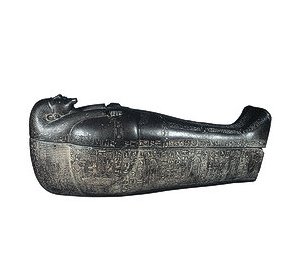
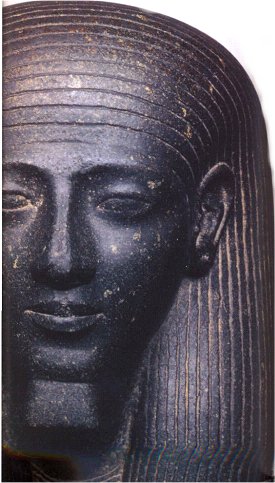
This anthropoid (mummy-shaped) sarcophagus shows the King in the Osiride-form with his arms crossed on his chest with bracelets on his wrists. He wears a short beard down his chin and a stripped three-part wig over his head, leaving his ears stuck out. Hanging down from his neck is a broad necklace with multiple strings. Below the folded arms, there is a carving of goddess Nut outstretching her wings over a vertical line of inscriptions, cartouches, and Sarcophagus Texts followed by other intersected lines. These writings provide the names and titles of the deceased King.
The lower section of the receptacle (that housed the other sarcophagi) is decorated with carvings showing a number of protective deities, such as Anubis, Thoth, Horus the falcon. Next to each of them are the words he utters for the deceased. On the right side, appears god Thoth holding a long scepter before a framed false door topped by two Udjat Eyes (also known as the 'Wedjat' and the 'Eye of Horus'). These large eyes symbolically dominate the tomb's monumental entrance.
Facts
- Material: Granitic Rock
- Size: height 220 cm, width 65 cm
- Found in: Tanis, Tomb of Psusennes I, Crypt of Psusennes I, 1940
- Discovered by: Pierre Montet
- Belonged to: Psusennes I
- Reign of: Psusennes I
- Dynasty: 21st Dynasty
- Period: Third Intermediate Period
- Museum: Egyptian Museum, Cairo
Related

Registration successfull!

Your Registration is successfully done
Please Check Your E-mail to Confirm Your Account. Do not forget to open the spam folder.
 EUR


 Español
 English
 العربيه


