Vizier Ankhu: A Dynasty of Chief Ministers in the Late Middle Kingdom
A three-generation vizierial family
Vizier Ankhu stands at the center of a remarkable lineage: he was the son of a vizier, held the office himself during the 13th Dynasty, and saw two of his own sons succeed him in the same post. Such direct succession across three generations is exceptional in Egyptian history, where the vizierate — the highest administrative office under the pharaoh — was typically appointed on merit and royal favor rather than inherited. The family's continuity provided stable governance during a period when the throne changed hands frequently.
Service under a succession of kings
Monuments name Ankhu under both King Khendjer and King Sobekhotep II, confirming he served more than one ruler. The 13th Dynasty is noted for its rapid turnover of kings, many reigning only a few years. A vizier who remained in office across multiple reigns acted as the anchor of the central administration, preserving institutional memory and overseeing the treasury, judiciary, and great works when royal authority was in flux. Papyrus Boulaq 18, an administrative journal from the period, records Ankhu as head of the court officials, illustrating the daily reach of his authority.
His father's prominence in the 12th Dynasty
Ankhu's father rose to the vizierate in the 12th Dynasty, the classical height of the Middle Kingdom. His distinction was marked by the rare honor of having his statues placed within the Temple of Amun-Ra at Karnak, the empire's principal religious center. Placement there signified royal endorsement and integrated the family into the sacred geography of Thebes, linking their administrative power to the god's own estate.
Surviving monuments and the Louvre stela
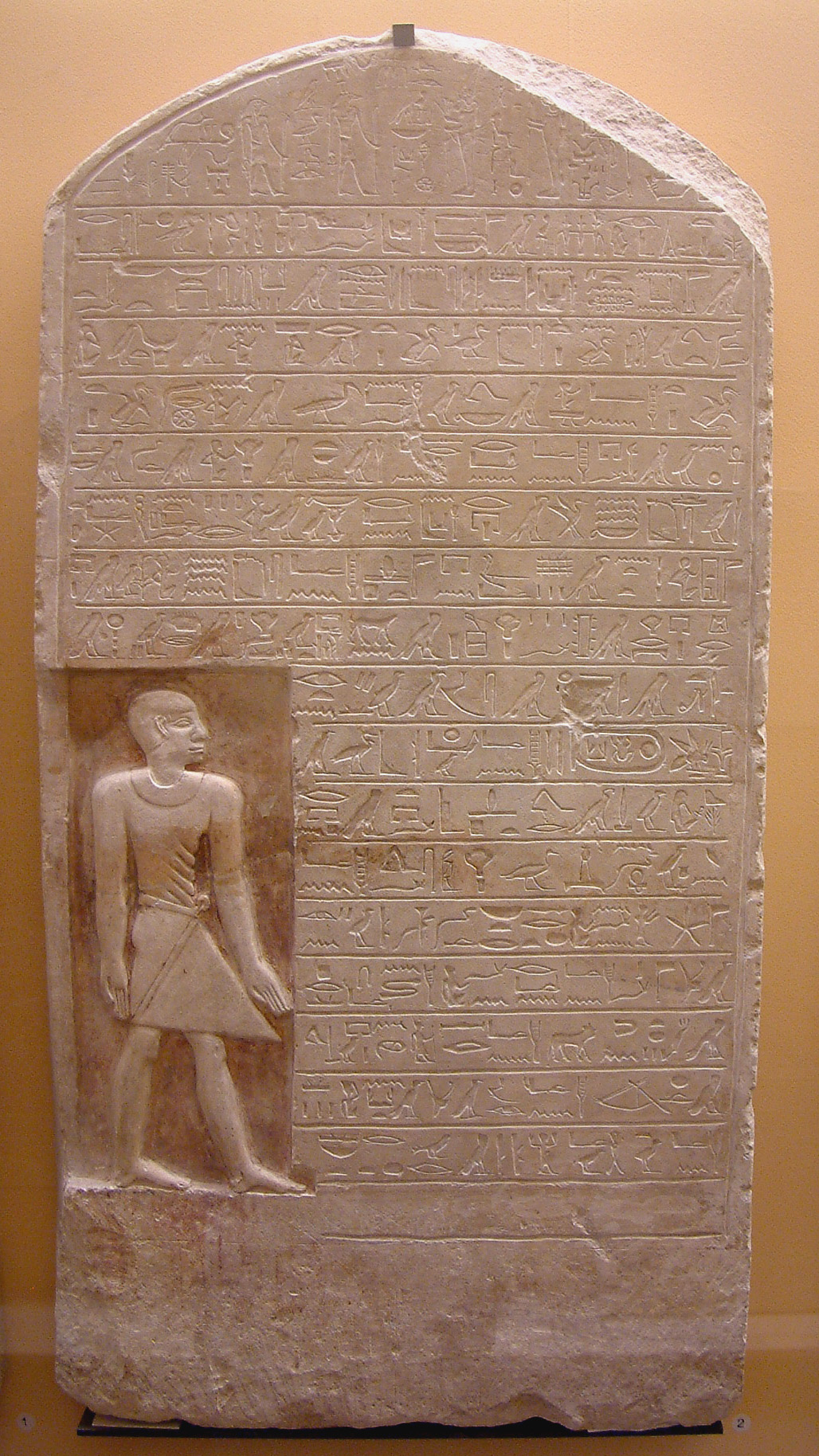
Ankhu's own career is attested by several monuments, including a stela now displayed in the Louvre Museum in Paris. The stela bears his image and titles, a standard medium for elite self-commemoration. Such objects were often set up in temples or cemeteries at Abydos, the cult center of Osiris, to ensure the owner's participation in the god's festivals and eternal provision. The Louvre piece preserves the visual program — figure, hieroglyphic text, and offering formula — that communicated Ankhu's status to both the living and the divine.
Common misunderstandings
The family's three-generation hold on the vizierate is sometimes mistaken for a formal hereditary title. In practice, each appointment still required the king's decree; the pattern reflects the court's trust in a proven household rather than a legal right. Another frequent confusion conflates the 13th Dynasty's many short-reigned kings with a collapse of administration. Ankhu's career demonstrates that the bureaucratic machine, led by the vizier, continued to function effectively even as the throne passed from Khendjer to Sobekhotep II and beyond.

Registration successfull!

Your Registration is successfully done
Please Check Your E-mail to Confirm Your Account. Do not forget to open the spam folder.
 EUR


 Español
 English
 العربيه


