Sistrum (Zagazig , Sharqiya)
This sistrum (rattle) was found in Zagazig, Sharqiya. Sistra were musical instrument highly admired and appreciated in ancient Egypt. Its name is derived from the Greek, 'seiein', meaning "to shake". This rattle consists of a handle and a U-shaped wood, metal, or clay frame, sometimes with small rings or loops of thin metal. When shaken, these rings produce a sound that was thought to be protective and also symbolic of divine blessing and the concept of rebirth. Its sound was also thought to echo that of a stem of papyrus being shaken. Scenes depicting goddesses (most commonly goddess Hathor) singers and princesses holding this instrument are frequently carved on temples and tombs' walls. It usually accompanied the sacred ritual song and dance. The sistrum was particularly associated with Hathor, the goddess of joy, happiness, and mirth.
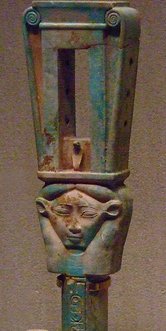
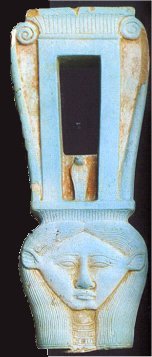
This example of the ancient Egyptian Sistra is made of fine faience and is 7.9 cm in width. Its total height measures 19 cm, and the height of the naos is 10.9 cm. Some depictions of cartouches with Hieroglyphic writings decorate two sides of the handle. Fastened to the handle is the cow-headed goddess wearing a smooth triple wig with her ears sticking out. The goddess is crowned with a rectangular naos topped with two coils at either side. The sistrum has three small bars (now lost) once fixed to the frame. At the lower side of the naos appears a copra.
Facts
- Material: Faience
- Size: height 19 cm, width 7.9 cm
- Found in: Zagazig , Sharqiya
- Museum: Egyptian Museum, Cairo
Related

Registration successfull!

Your Registration is successfully done
Please Check Your E-mail to Confirm Your Account. Do not forget to open the spam folder.
 EUR


 Español
 English
 العربيه


