Muhammed Anwar El Sadat
Muhammad Anwar Al Sadat was a very important historical figure whose marks and actions shaped the Egyptian politics in the 20th century. He was born on25 December, 1918 in Mit Abu al-Kum, al-Minufiyah, to a poor family, one of 13 brothers and sisters. He spent his early childhood listening to stories about the resistance to the British Occupation from his grandmother who took care of him. He also idolized Mahatma Gandhi and his belief of nonviolence when facing injustice. He graduated from the Royal Military Academy in Cairo in 1938 and later entered the army as a second lieutenant. He was posted in Sudan from where he married his wife. There, he met Gamal Abdel Nasser, and along with several other junior officers they formed the secret Free Officers Movement. This group committed to freeing Egypt from the British domination as well as the royal corruption.
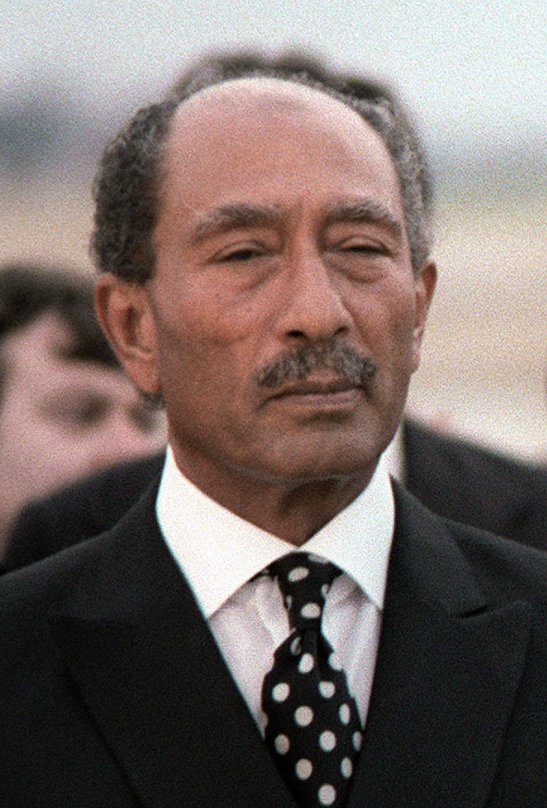
Saddat had been an active member in the Free Officers Movement before 1952 and became the Vice President during the rule of Abd al-Nasser. In 1970, Saddat was elected the President of Egypt. The third President of Egypt, Sadat served from 15 October 1970 until his assassination on 6 October 1981. In the first years of his rule, he broke prisons and freed most prisoners who were arrested during Nasser era due to their political stands. He also brought to trial a number of former government officials accused of criminal excesses during the Nasser era.
On October 6, 1973 Egypt regained its national pride by launching a sudden attack on the Israeli army. Egypt and Syria crossed the cease-fire lines in the Sinai and Golan Heights (which were occupied by Israel in 1967); crossed the Suez Canal and destroyed Barlef Line. In November 1977, Sadat went to Jerusalem to make negotiations regarding peace with Israel, which ended with the signing of the Camp David Agreements in 1978, in which Israel agreed to withdraw from Sinai in May 1982. His visit to Israel and the eventual Israel-Egypt Peace Treaty was an act enormously unpopular with the Arab world and Islamists, and resulted in Egypt being expelled from the Arab League.
In his eleven years as president, Sadat changed Egypt's direction, departing from some of the economic and political principles of Nasserism by reinstituting the multi-party system and launching the Infitah (or the 'open door' policy). In 1981, while watching a parade commemorating the victory of 1973 War, al-Sadat was assassinated.

Registration successfull!

Your Registration is successfully done
Please Check Your E-mail to Confirm Your Account. Do not forget to open the spam folder.
 EUR


 Español
 English
 العربيه


