Ahmed Orabi
Ahmed Urabi is a famous Egyptian national leader who protested against the unjust rules of the Khedive and the interference of Britain in the internal affairs of Egypt in 1879.
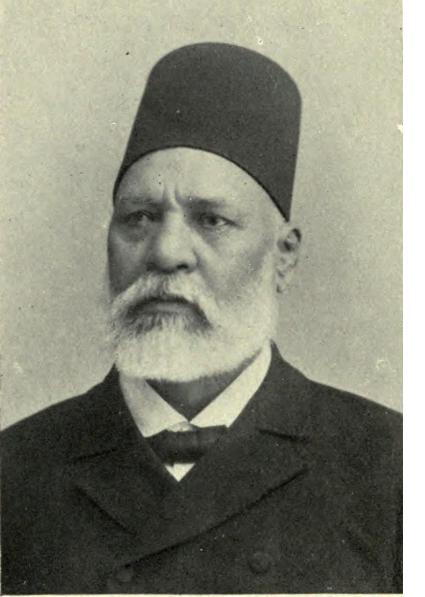
He was born in 1841 in one of the small village nearby Zaqaziq in El Sharqeya Governorate of a quite wealthy man. He received decent education till finishing his study in El Azhar University and joining the army. He rose in ranks quickly till occupying the post of lieutenant colonel at a very young age.
Thanks to the Ismail Pasha decree of changing the reforms and allowing the Egyptians of obtaining the titles like the Turkish and other non Egyptians regardless to the social position or religion. Urabi occupied many important posts during the Khedive Tawfik rule including: the under-secretary of war and member of the cabinet.
In 1881, Ahmed Orabi and a group of the patriot Egyptian officers led the first revolution in the history of Modern Egypt that was known as Urabi Revolt. Few months after this revolution, Khedive Tawfiq issued a new decree preventing the Egyptians from holding the post of Officers. As a result Urabi and other Egyptian officers revolted and called for repealing that decree and the Khedive was obliged to to respond to their request and repeal his decree.
Ahmed urabi dedicated his life for the resistance against the British Occupation and the foreign forces interference in the Egyptian affairs. Thus the British regarded him as a threat for their own good in Egypt and were afraid of calling for gaining control over the Suez Canal for paying Egypt's debts. So that the British forces attacked Alexandria in 1882 and met the national Egyptian resistance troops in the Battle of Kafr El Dawar where they were defeated and prevented from entering Cairo. Another British army tried to Enter Egypt from the side of the Suez Canal but they were defeated by the Ahmed Urabi army in El Tall El Kabeer.
During Urabi's resistance he was captured and sentenced to death by the Khedive who was afraid of Urabi and his increasing popularity in Egypt. Under the pressure of the British Ambassador Lord Dugferin, Urabi was exiled to Ceylon in 1882 for and stayed there for about 9 years. In 1911 Ahmed Urabi died but the Egyptian resistance against the occupying powers and the Khedive tyranny continued on the hands of Saad Zaghloul who held 1919 revolution.

Registration successfull!

Your Registration is successfully done
Please Check Your E-mail to Confirm Your Account. Do not forget to open the spam folder.
 EUR


 Español
 English
 العربيه


