Amenhotep IV (Akhenaten)
After the death of King Amehotep III, his son Akhenaten or Amenhotep IV succeeded him to the throne at 1397. He ruled Egypt for about ( ) of stability, welfare and prosperity even more than that of his father's reign. The prosperity of this reign is evidenced by the luxuriously decorated tombs and temples discovered from that period with large quantities of gold, bronze, and silver.
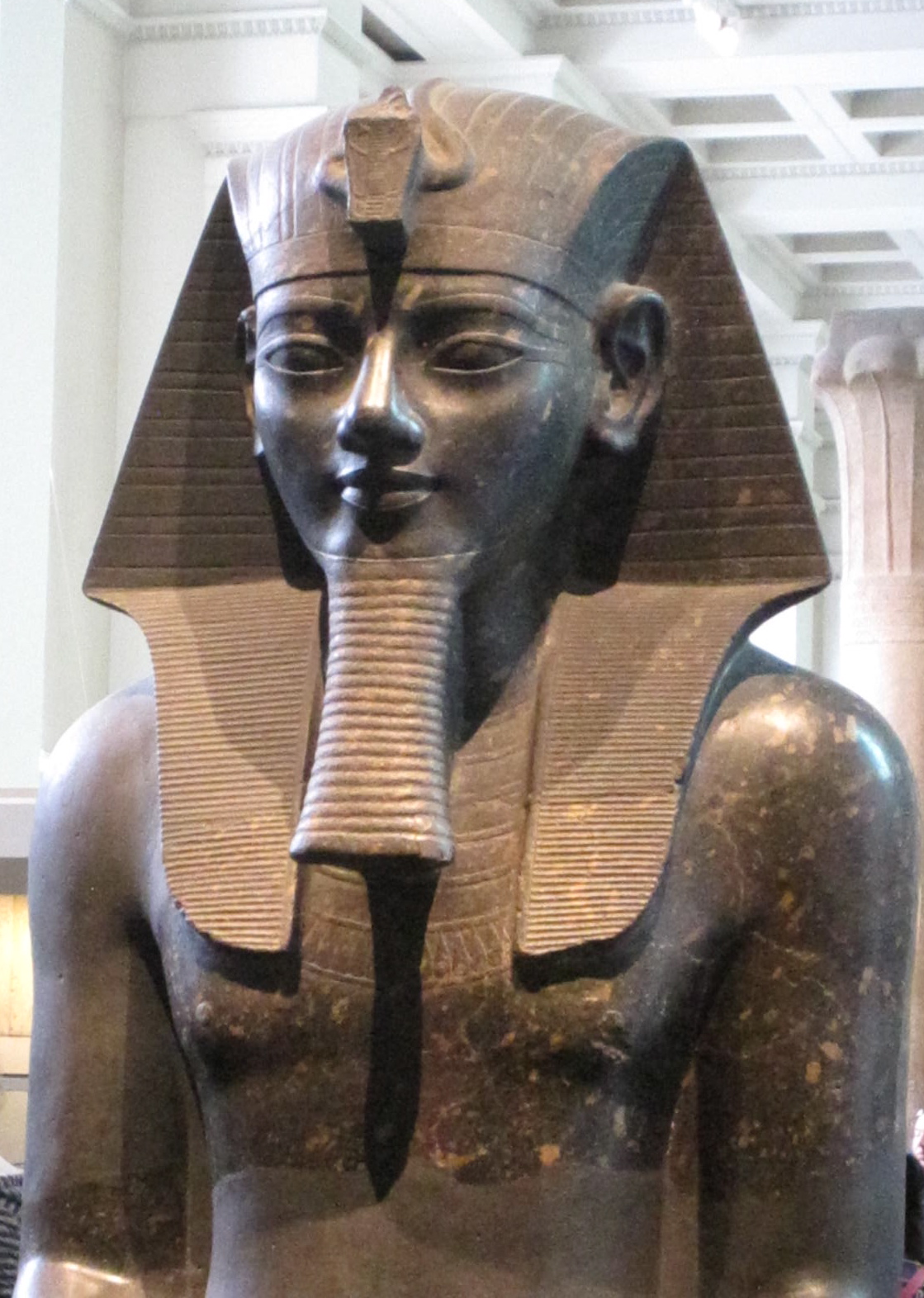
After four years of his accession to the throne, Amenhotep IV called himself Akhetaten and announced Aten to be the main god and established his Temple of Aten outside the walls of Amun-Ra Temple. Shortly after his deat, the temple was totally ruined and parts of it were used for building the constructions of Hor-Moheb.
Akhenaten was a gracious military leader who sent his army to put down the rebellion of Nubia in the 12th year of his reign.
King Akhetaten Chief Wife was Queen Nefertati who played a great role in his life and this is accentuated by the appearance of her beside him in all the religious and official celebrations and in the scenes while making offerings to Aten. She brought him six daughters and no son, but he brought a son of another unknown wife who was Tutankhamun. After the death of Akhetaten, he was succeeded by his son Tutankhamun who was the only remaining member of the royal family and who accessed the throne at a very young age.
In the Egyptian Museum, one can find stunning statues, portraits and slabs for Akhenaten. Most of these pieces were discovered in the site of Aten Temple and are considered as remarkable examples for the main features of the art at that time.

Registration successfull!

Your Registration is successfully done
Please Check Your E-mail to Confirm Your Account. Do not forget to open the spam folder.
 EUR


 Español
 English
 العربيه


