Zoser (Djoser or Netjerikhet)
Archaeological evidence and the King Lists tell that King Djoser (Zoser) was the founder of the Third Dynasty. It was not until the Third Dynasty that Memphis, the capital and the centre of the civilization, became an integral city. This is especially because Djoser was the first king to settle down in this city and to make some improvements in it with his attention devoted to all aspects of life.
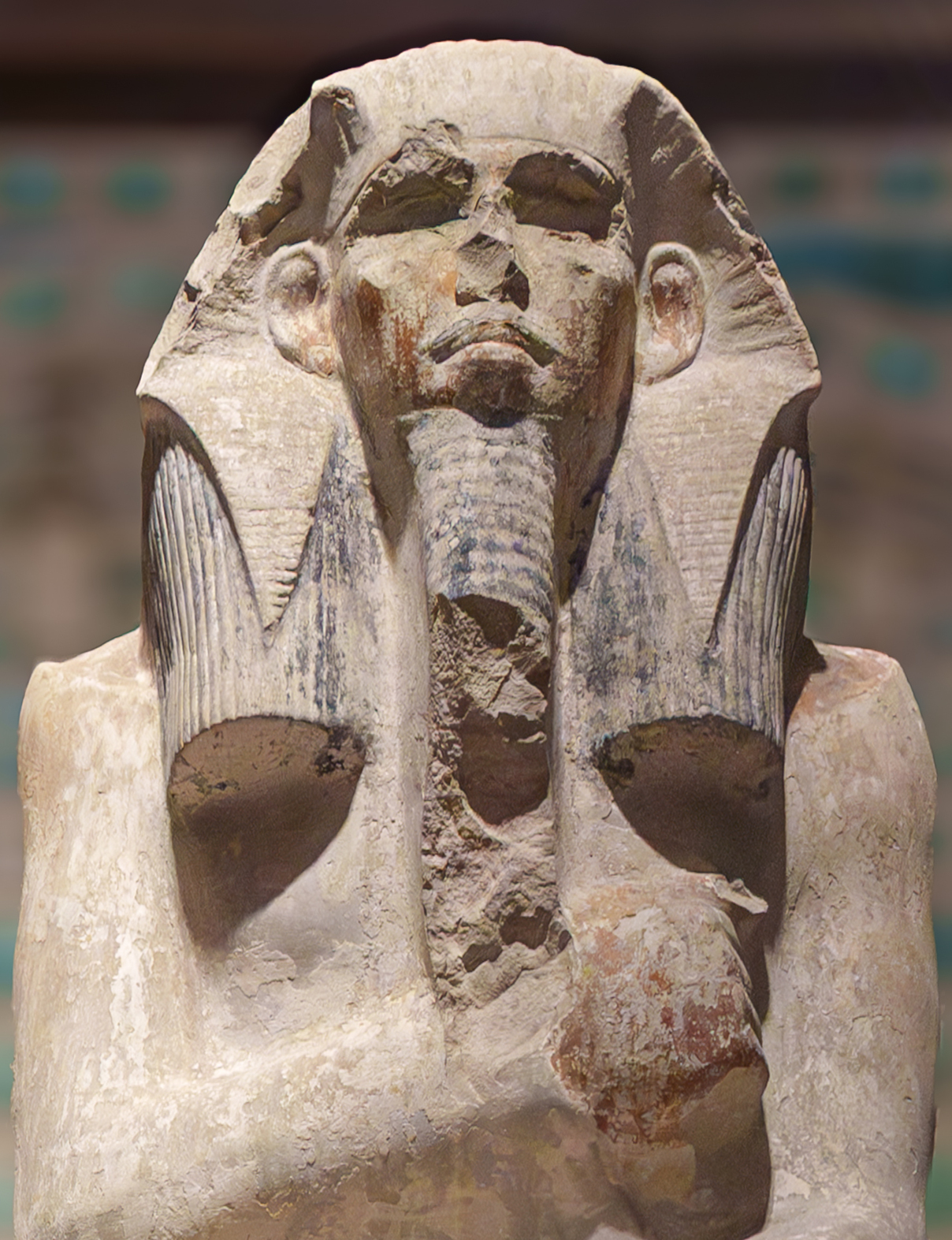
Djoser Reign extended over 19 years, a seemingly short span of time in which he accomplished numerous achievements. Djoser's reign drives its kudos from a glorious inscription on the Sehel Island, near Elephantine at Aswan. At Sehel Island near Elephantine, Ptolemy V (Epiphanes) had inscribed on a rock face, 2000 years after Djoser's death, a text which describes the action taken by Djoser to deal with the 7-year Famine Stele during his reign. King Djoser had been endeavoring to pinpoint the sources of the Nile flood and to perceive the role of ram-headed god, Khnum (Lord of the Cataract). He then makes an offering to Khnum, and the god appears to him in a dream, promising:
"I will cause the Nile to rise up for you. There will be no more years when the inundation fails to cover any area of land. The flowers will sprout up, their stems bending with the weight of the pollen."
He also sent a great number of expeditionary units to Sinai for two purposes: to overcome the rebellions of Bedouins [punitive expeditions] and to bring stones and minerals from the mines. In addition, other expeditions were sent to Nubia, for the purpose of supporting the Egyptian position there and frustrating any rebellions that could have been raised in Nubia.
Djoser's great funerary monument, the Step Pyramid Complex in the Necropolis of Saqqara designed by his architect Imhotep, was in fact the first to be constructed wholly with stone. It consists of the Step Pyramid; the Open Court; the Heb-Sed Complex; and the Mortuary Temple of the King.

Registration successfull!

Your Registration is successfully done
Please Check Your E-mail to Confirm Your Account. Do not forget to open the spam folder.
 EUR


 Español
 English
 العربيه


