Userkaf
According to the Papyrus Westcar, King 'Userkaf' (whose name means "powerful is His Ka") was the son of Redjedet. On the other hand, there is a tendency to consider him Princess Neferhetepes' son, an extraordinary limestone bust of whom is in the Louvre. But the identity of her husband is not yet fixed. It is suggested that he may have been "Re's priest, Sakhebu's lord" as mentioned in Papyrus Westcar. So we are not sure about Userkaf's origin, but most probably he held an important position in the Re's temple, and he was supported by the priests to have a chance ascending the throne. For this very purpose, he married Khentkawes in order to legitimize his position.
His reign was probably brief. According to the Turin Canon, it lasted over 7 years, which is more plausible than the 28-year-regency span thought by Manetho. The country as a whole and its administration had not witnessed great changes in the beginning of the Userkaf Reign. For instance, there are some of the Fourth Dynasty officials who remained in office, such as Nykaankh at Tihna, Middle Egypt.
His reign was characterized by certain building achievements, particularly in Upper Egypt, where he enlarged the temple at Tod. This temple was dedicated to Montu, the local god of Theban Region and later also the national god of war. The first known Egypt-Aegean world links can be probably dated to Userkaf's reign, with the evidence of an inscribed stone vessel from his mortuary temple found on Kythera. The Pyramid of Userkaf, located some distance of Djoser's complex in Northern Saqqara, is now much ruined. He also built a sun-temple at Abusir which seems to have been a replica of the one at Heliopolis, thus started a tradition that was later followed by his successors. His choice of Abusir as the location of his sun-temple is doubtlessly connected to the closeness of Sakhebu. Sakhebu was a town thought to have been located at Zat el-Kom, about 10 km north of Abu Roash, almost at a point where the Nile splits off into two branches; namely Damietta and Rosetta.
The new order was also expressed through the Horus name chosen by Userkaf. That name was 'Iry- Maat' which means 'He who puts Maat into practice', Maat being the universal harmony that the creator had to maintain. By this means, Userkaf was deliberately claiming responsibility for the maintenance of creation as a whole.
Clearly enough, the early abandonment of his mortuary cult at the end of the Fifth Dynasty indicates his relative importance.
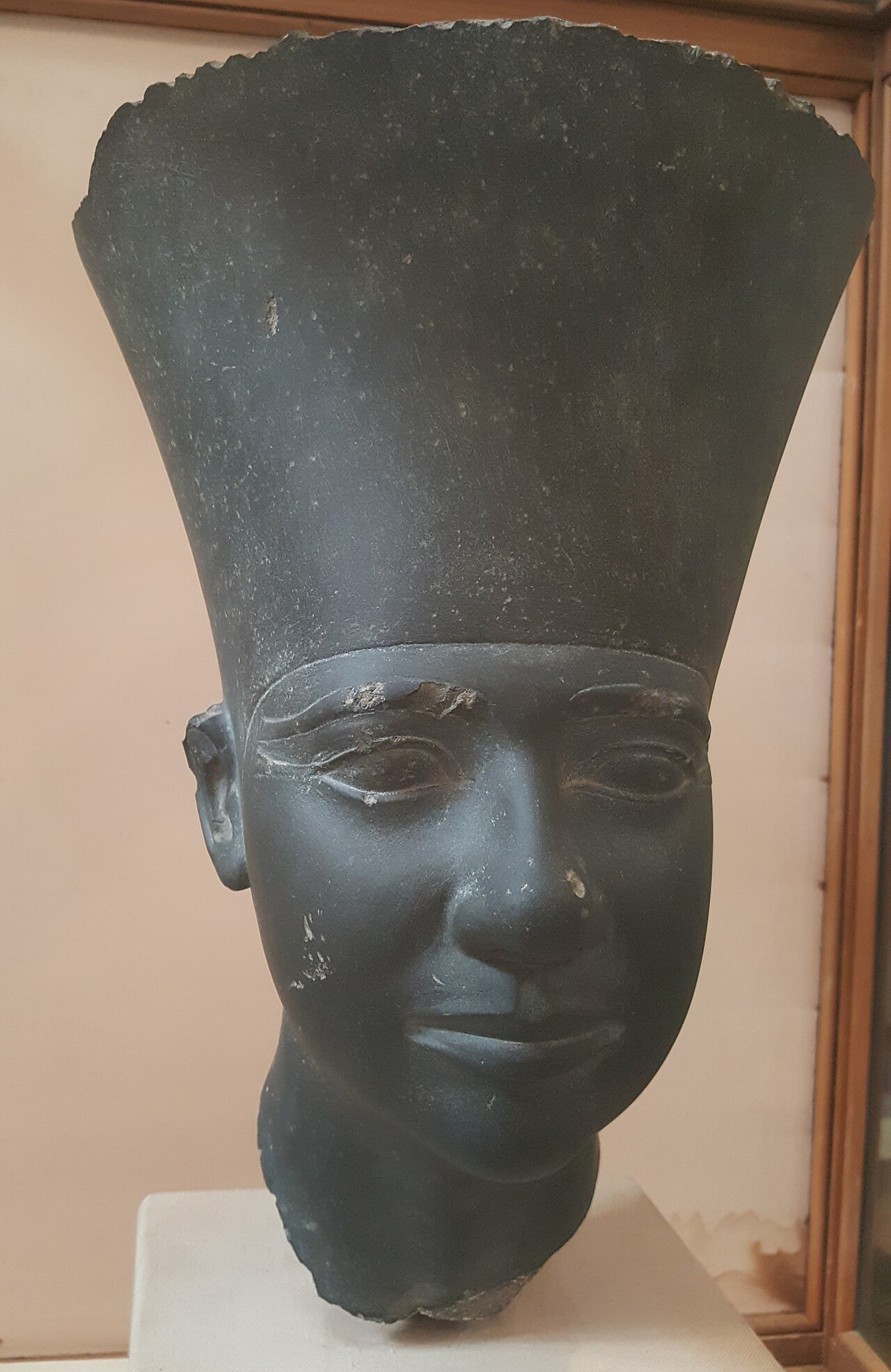
The famous monument belonging to King Userkaf is his schist head displayed in the cairo Museum for the time being. The head was excavated by the Swiss Institute, inside Userkaf's Sun Temple. Unfortunately this temple was destroyed to a great extent.

Registration successfull!

Your Registration is successfully done
Please Check Your E-mail to Confirm Your Account. Do not forget to open the spam folder.
 EUR


 Español
 English
 العربيه


