The Four Shrines
The four shrines of Tutankhamun Tomb are the rarest example for total of four shrines that were used for keeping the sarcophagus with the deceased body.
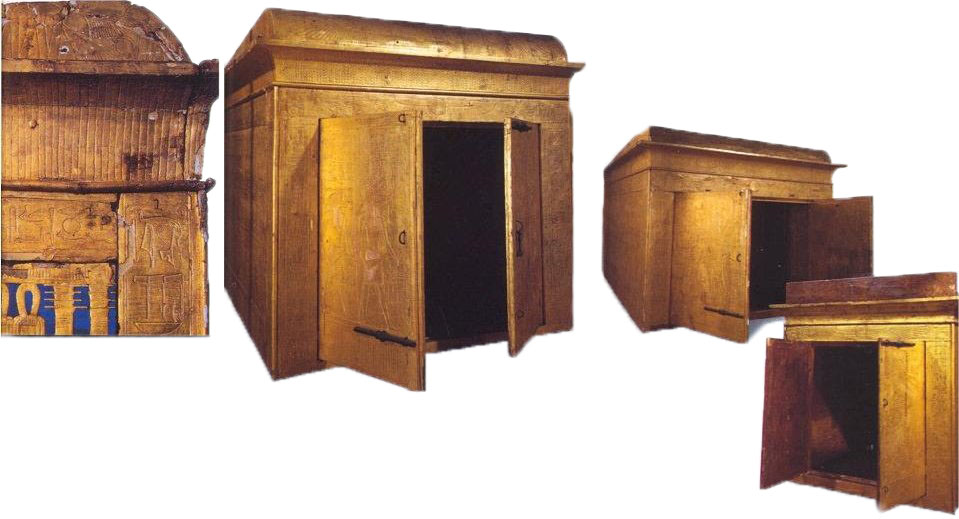
These shrines are made of heavy oak panels and lined with gold leaf on plaster. The interior and the exterior parts of these shrines are decorated with religious texts and scenes from the Book of the Dead and other religious books. The most distinguishing feature of the outer shrine is the blue faience inlays and the djed and tit signs ornamenting it.
Each one of these shrines was used as a symbol for something or a step in the journey of the king in the hereafter. The outer shrine was representing the pavilion in which the king renewed his power and energy during the ceremonies marking the royal Jubilee. The second and the third were designed in the form of temples of the predynastic period, while the fourth one was the place where the sarcophagus was placed.
Facts
- Material: Gilded Wood, Faience
- Found in: Valley of the Kings, 1922
- Discovered by: Karter
- Belonged to: Tutankhamun
- Reign of: Tutankhamun
- Dynasty: 18th Dynasty
- Period: king tut
- Museum: Tutankhamun collection (moved from the Egyptian Museum in Cairo to the Grand Egyptian Museum, Giza)
Related

Registration successfull!

Your Registration is successfully done
Please Check Your E-mail to Confirm Your Account. Do not forget to open the spam folder.
 EUR


 Español
 English
 العربيه


