Shawabty and the Model of a Sarcophagus Belonging to Amenhotep Known As Huy
These shawabty and the model of a sarcophagus belonging to a royal scribe with the name Amenhotep (known as Huy) were found in Abydos, a rich archeological site in Luxor. These items made from faience were identified to date back to the Eighteenth Dynasty (1550-1075 BC). Shawabtis (also Ushabtis) were funerary figurines placed in tombs among the grave goods and intended to act as substitutes for the deceased, should he/she be called upon to do manual labor in the fields of the Land in the afterlife. This is suggested from the name ' usheb' which means 'respond'. They were inscribed with a magical formula which would activate them and were mainly made from various materials including; faience, wax, clay, wood, stone, terracotta and, occasionally, glass and bronze. Approaching the end of the Seventeenth Dynasty, shawabtis placed inside tiny wooden models of sarcophaguses became widespread.
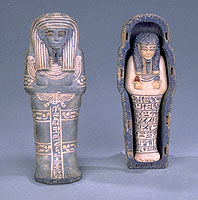
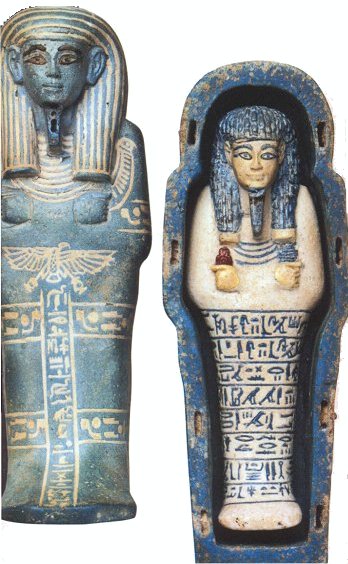
Made from faience, this example of shawabtis measures 13.8 cm in height; while the mummy-shaped sarcophagus that housed it is 18 cm in height and 8 cm in width. The statuette exposes the most impressive facial expressions with his false beard that intensifies solemnity and peacefulness. Over the head, there is a long, curly, triple wig in blue from which his ears stick out. It is totally wrapped with bandages leaving the two fists visible, carrying the Sa amulets (symbol of protection against evil influences) and the Djed Pillar (symbol of stability). Decorating the body are some spells and prayers in hieroglyphics from Chapter 6 of the Book of the Dead by which the deceased commands the shawabti to take his place in handling any physical work beyond the tomb. Hanging down from the smooth neck is a broad collar carved in minute detail. The anthropoid sarcophagus was decorated with the image of the deceased in the Osirid-form with a striped triple wig. Hanging from the smooth neck is a broad shoulder-to-shoulder collar fastened at either side by clasps with heads of Horus. Nekhbet, the vulture goddess stands down the folded arms with her arms widely spread on a blue background. Further down, there are two horizontal rows of hieroglyphics outlined in white.
Facts
- Material: Faience
- Found in: Abydos
- Belonged to: Amenhotep, a royal scribe
- Reign of: Amenhotep Iii
- Dynasty: 18th Dynasty
- Period: New Kingdom
- Museum: Egyptian Museum, Cairo
Related

Registration successfull!

Your Registration is successfully done
Please Check Your E-mail to Confirm Your Account. Do not forget to open the spam folder.
 EUR


 Español
 English
 العربيه


