Sarenput II: Khnum Priesthood and Military Command at Elephantine
A provincial governor of the Middle Kingdom
Sarenput II served as Overseer of the Priests of Khnum and Commander of the Garrison at Elephantine during the reign of Amenemhet II of the XII Dynasty. This dual appointment placed him at the head of both the religious establishment of the ram-headed creator god and the military force guarding Egypt's southern frontier at the First Cataract. Provincial governors of the Middle Kingdom frequently combined priestly and military authority, reflecting the strategic importance of Elephantine as the gateway to Nubia and the center of the Khnum cult. The title "Overseer of the Priests" indicates administrative control over the temple's extensive estates, personnel, and ritual calendar, while the garrison command gave him authority over troops, trade caravans, and diplomatic missions passing through the border region.
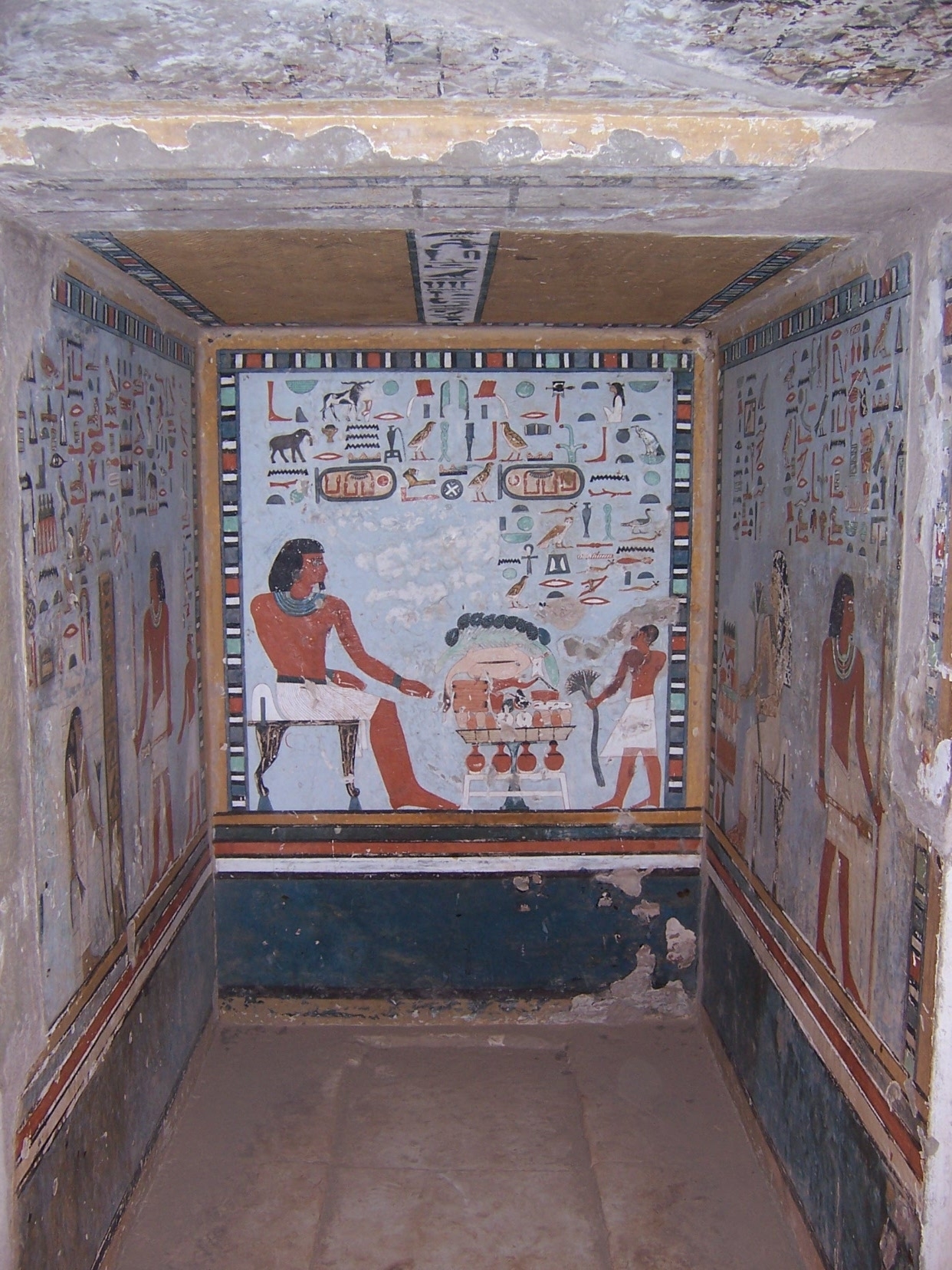
Tomb location in the western necropolis
His tomb was carved into the hillside on the western bank of the Nile opposite the city of Aswan, following the ancient Egyptian tradition of situating burial places in the realm of the setting sun. This necropolis, known today as Qubbet el-Hawa, contains the rock-cut tombs of Elephantine's governors from the Old Kingdom through the Middle Kingdom. The western bank location ensured the deceased's journey toward the afterlife aligned with the solar cycle, while the elevated position protected the tomb from floodwaters and offered a commanding view of the river the governor once controlled.
Pillared chamber architecture
The tomb consists of a large transverse chamber supported by six rock-cut columns left undecorated, a feature typical of Middle Kingdom provincial tombs where the living rock itself was considered sufficient adornment. The pillars divide the space into aisles and create a processional axis leading toward the inner chambers. This architectural form derives from earlier Old Kingdom mastaba chapels but adapts to the rock-cut medium, with the columns hewn directly from the cliff face rather than built as separate elements. The uninscribed surfaces suggest the decorative program focused on the deeper, more sacred areas of the tomb.
Offering table with titular inscriptions
Between the second and third pillars stands an offering table bearing inscriptions that record Sarenput II's name and titles. Such tables were the focal point of the funerary cult, where priests presented food, drink, and incense to sustain the deceased's ka in the afterlife. The placement within the pillared hall, rather than in a separate chapel, allowed offerings to be made in the presence of the architectural grandeur that proclaimed the governor's status. The inscribed titles confirm his dual religious and military roles, providing contemporary documentation of the offices he held during Amenemhet II's reign.
Gallery of mummiform statue niches
Beyond the pillared chamber, a gallery contains six niches, each originally housing a mummiform statue of the deceased. These statues depicted Sarenput II wrapped in the bandages of Osiris, god of the afterlife, associating him with resurrection and eternal regeneration. The number six may reflect a symbolic grouping, perhaps representing the deceased at different stages of life or in different ritual capacities. Mummiform statues served as substitute bodies should the mummy be damaged, and as focal points for the ka to receive offerings. Their placement in a gallery behind the main chamber follows the typical progression from public to increasingly private sacred space.
Biographical text on the gallery wall
The front wall of the gallery preserves a colorful autobiographical text recounting Sarenput II's career and achievements. Such biographies were a hallmark of Middle Kingdom elite self-presentation, recording the subject's service to the king, piety toward the gods, and benefactions to the local community. The text would have detailed his progression through offices, military campaigns or expeditions he led, temple endowments he made, and his just governance of the nome. Written in the first person, it allowed the deceased to speak eternally to visitors, ensuring his reputation and maat — righteous order — endured beyond death. The painted coloration, rare in rock-cut tombs where relief is more common, suggests a deliberate artistic choice to enhance the text's visibility and impact.

Registration successfull!

Your Registration is successfully done
Please Check Your E-mail to Confirm Your Account. Do not forget to open the spam folder.
 EUR


 Español
 English
 العربيه


