Napoleon Bonaparte
Napoleon Bonaparte (also known as Napoleon I) was the Emperor of the French. He was born in 15 August 1769 in Ajaccio on the Mediterranean island of Corsica. He was the son of Carlo and Letizia Bonaparte. He was a very important historical figure whose marks and actions shaped European politics in the early 19th century. As a powerful hungry conqueror, Napoleon seized Egypt to undermine Britain's access to its trade interests in India. His armies defeated the Mameluke army at Imbabah and Shubra Khit; took Alexandria; and occupied Cairo.
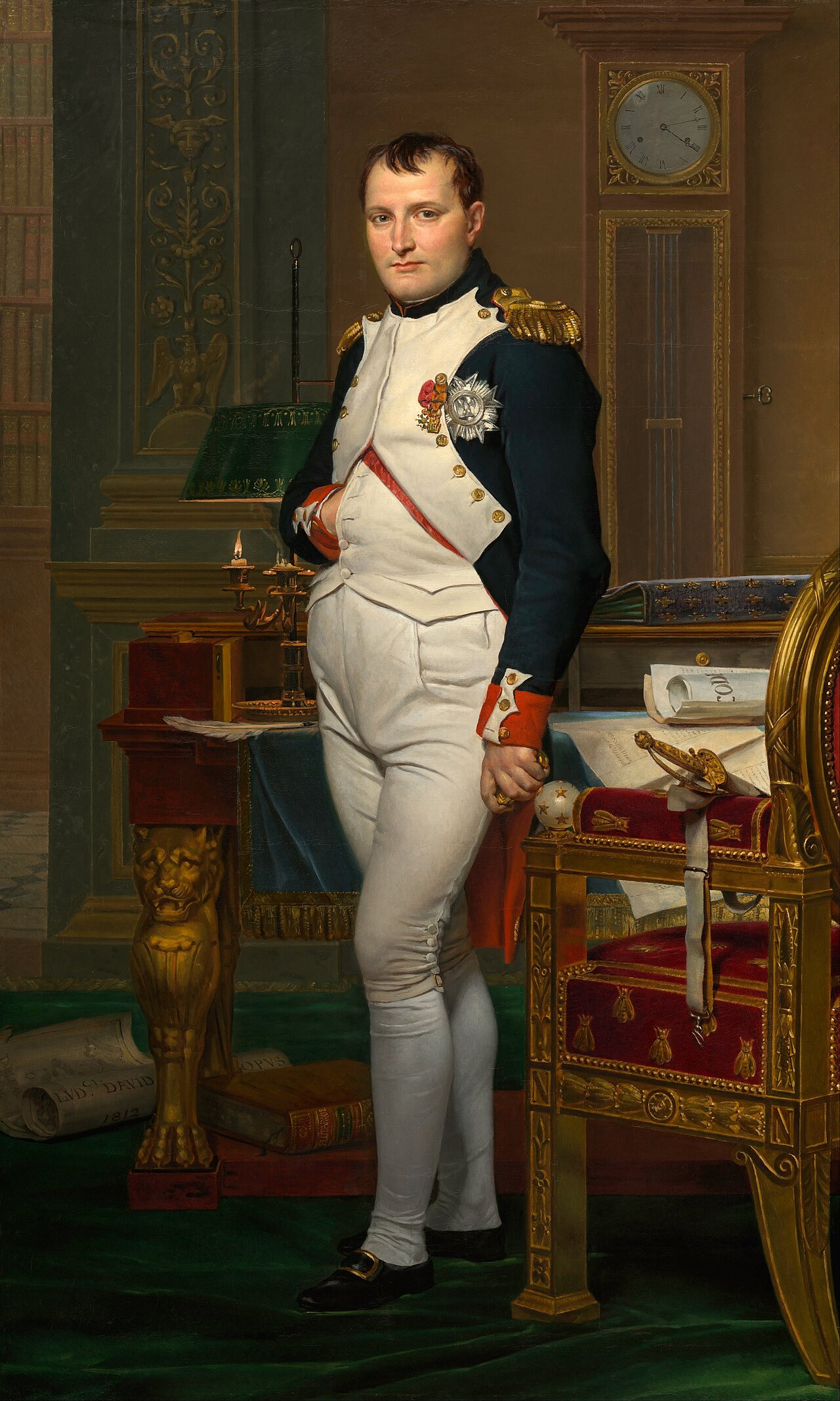
The people of Cairo rioted against the French. Bonaparte and General Jean Baptiste Kléber quickly suppressed this rising; but the stabling of the French cavalry in the mosque of Al-Azhar gave great and permanent offence. Napoleon established a style of the French government. He implemented public works projects to clean up and renovate the long-neglected country, clearing blocked canals, cleaning the streets and building bridges. He also introduced new crops and a new system of weights and measures. The task of the 167 scholars, scientists and artists who accompanied him was to investigate every aspect of life in ancient and contemporary Egypt. The publication of "Description de l'Egypte" in 24 volumes became the foundation of modern research into the history, society, and economics of Egypt.
Few months later, Napoleon, with a very small company, secretly left Egypt to France, leaving his troops behind and General Jean-Baptiste Kléber as his successor. General Kléber was assassinated, leaving the army to General Menou, who claimed to have converted to Islam and declared Egypt a French protectorate.

Registration successfull!

Your Registration is successfully done
Please Check Your E-mail to Confirm Your Account. Do not forget to open the spam folder.
 EUR


 Español
 English
 العربيه


