Mummy of Merenptah
This mummy belongs to Pharaoh Merneptah, the son of Ramesses II and the fourth king of the Nineteenth Dynasty who met his death in 1202 BC. Depending on the realization that every thing after death came to life again, the Ancient Egyptians hold the belief that there is a life after death and therefore the mummification of dead bodies was inevitable. Notably, mummification symbolizes the fear of the Ancient Egyptians had of death and answers their eager desire for immortality. Such elaborate burial practices of Ancient Egyptians suggest that the Egyptians began early to make plans for their death out of their great love of life.
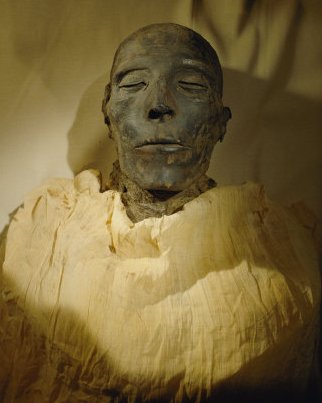
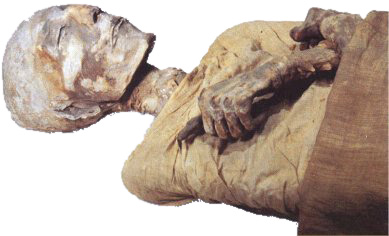
Discovered by the famous archeologist V. Loret in 1898, the mummy of Merneptah (Merenptah) was found hidden with other royal mummies in the Tomb of Amenhotep II, in the Valley of the Kings. We could identify the mummy's owner from a label written by priests. Merenptah was fairly advanced in years when he ascended the throne. He sent several military expeditions abroad: not only to Nubia, but also into Palestine, where he subdued the rebellions of Ashkelon, Gezer and Yenoam. The 'Victory Stela' that records these victories also contains the first reference in Egyptian sources to Israel, not as a country or city but as a tribe.
Facts
- Material: Mummy
- Found in: The Tomb of Amenhotep Ii, in the Valley of the Kings, 1898
- Discovered by: V. Loret
- Belonged to: Merenptah
- Reign of: Merenptah
- Dynasty: 19th Dynasty
- Period: New Kingdom
- Museum: Egyptian Museum, Cairo
Related

Registration successfull!

Your Registration is successfully done
Please Check Your E-mail to Confirm Your Account. Do not forget to open the spam folder.
 EUR


 Español
 English
 العربيه


