Queen Iput: Regent and Royal Mother of the Sixth Dynasty
Queen Iput stood at the center of Egypt's transition from the Fifth to the Sixth Dynasty. As the daughter of King Wenis, chief consort of King Teti, and mother of King Pepi I, she bridged two royal houses and governed the kingdom during her son's long minority. Her pyramid at Saqqara remains a key monument of this pivotal era.
Royal Lineage and Dynastic Bridge
Iput's bloodline connected the waning Fifth Dynasty to the rising Sixth. Her father, Wenis, was the last ruler of his line, and her marriage to Teti secured the new dynasty's legitimacy. This dual heritage made her son Pepi I the heir to both traditions, smoothing a succession that could have fractured the state.
Regency for Pepi I
When Teti died, Pepi I was too young to rule alone. Iput assumed the regency, guiding the administration and maintaining stability until her son reached maturity. Her authority is reflected in the continuity of royal building projects and the uninterrupted functioning of the central government during this formative period.
Pyramid at Saqqara
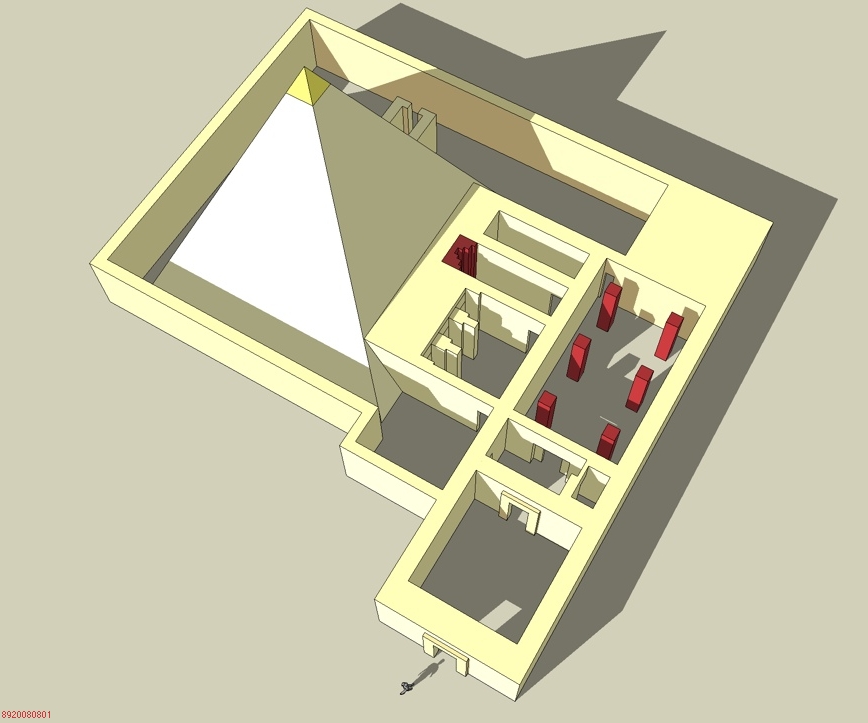
Iput's pyramid stands in the Saqqara necropolis beside the mortuary temple of Teti, placing her eternally at his side. The complex followed the standard Old Kingdom layout, with a mortuary temple, causeway, and valley temple, though its scale was modest compared to the king's own monument. Its location underscores her status as chief consort and the mother of the heir.
Discovery and Excavation
The pyramid came to light in the early twentieth century through the work of the archaeologist Loret. Subsequent excavation cleared the substructure and surrounding courts, revealing the plan of the queen's funerary complex and its relationship to the larger Teti cemetery.
Khuit's Pyramid
Adjacent to Iput's monument lie the remains of a second queen's pyramid, attributed to Khuit, another wife of Teti. The proximity of the two pyramids illustrates the clustered arrangement of royal family burials in this necropolis and confirms that multiple queens received pyramid complexes of their own.

Registration successfull!

Your Registration is successfully done
Please Check Your E-mail to Confirm Your Account. Do not forget to open the spam folder.
 EUR


 Español
 English
 العربيه


