Djedhorefankh Sarcophagus
This highly admired sarcophagus of Djedhorefankh was found hidden in his elaborate tomb in Gurna in West Thebes (present-day Luxor) and was identified to date back to the start of the Twenty-second Dynasty, during the reign of Sheshonq I or Osorkon I (c 930-920 BC). Sarcophaguses were endowed with a very high symbolic value besides providing physical protection for the body. They were intended to be the house of eternity where the KA of the deceased should reside till the afterlife.
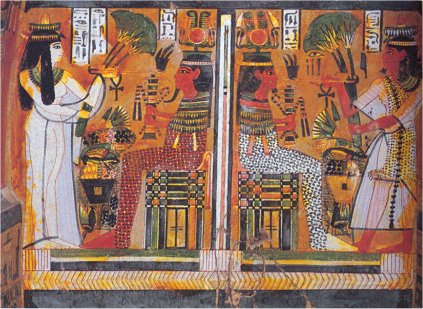
Made from painted wood, this example of multicolored anthropoid (mummy-shaped) sarcophaguses belongs to Djedhorefankh, an observer of the altars of the Temple of Amun-Ra at Karnak during the Twenty-second Dynasty. The inner decorations of this lidless sarcophagus, divided into registers, are excessively colorful and show depictions of deities and the process of mummification the dead body passed through as well as the important funeral ritual of the Opening of the Mouth, the purpose of which was to restore use of the senses to the deceased. At the lower section, there is a frieze of uraeus serpents, symbol of protection against evil influences.
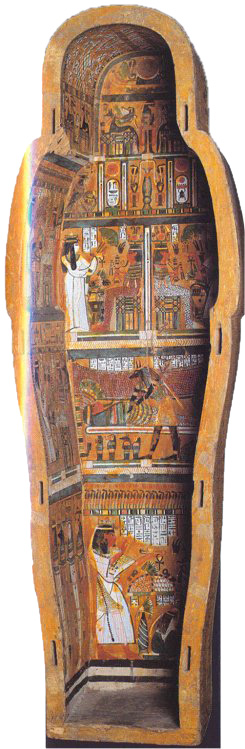
A sem priest (mortuary priests who served the tomb cultuses, performing the elaborate rituals at mummification and burials) is shown fumigating the mummy with incense. In the upper registers, appear a scene showing two figures of god Ptah seated on their throne with the flail, crook and Djed pillar in their hands and receiving offerings and huge lotus flowers from a priest wearing a leopard skin (right) and priestess wearing a long transparent tunic and holding an Ankh (left). The lower register shows a scene of Anubis, the god of mummification, leaning down over the deceased's mummy and wrapping it with bandages with the canopic jars in the shape of the four sons of Horus (which protect the deceased's internal organs) near the jackal-headed priest. These four sons are: the falcon-headed Kebksenuf, the man-headed Amset, the baboon-headed Hapi, and the jackal-headed Duamutef.
Facts
- Material: Painted Wood
- Size: width 61 cm
- Found in: West Thebes, Gurna
- Belonged to: Djedhorefankh
- Reign of: Sheshonq I
- Dynasty: 22nd Dynasty
- Period: Third Intermediate Period
- Museum: Egyptian Museum, Cairo
Related

Registration successfull!

Your Registration is successfully done
Please Check Your E-mail to Confirm Your Account. Do not forget to open the spam folder.
 EUR


 Español
 English
 العربيه


