Serapis: The Syncretic Deity of Ptolemaic Egypt
Serapis, also spelled Sarapis, was a significant Hellenistic-Egyptian god created by the Greek pharaoh Ptolemy I Soter of the Ptolemaic Dynasty, who reigned from 305 to 282 AD. This deity represents a profound religious syncretism that became a defining characteristic of the Ptolemaic Era, aiming to integrate the established Egyptian religion with the incoming Hellenic beliefs. This process involved blending two or more distinct religious belief systems into a new, cohesive system, or incorporating beliefs from unrelated traditions into an existing religious framework. Before his formal creation as Serapis, this god was known as Aser-hapi, which translates to Osiris-Apis, and was understood to embody Osiris in his entirety, rather than merely his Ka, or life force. The cult of Serapis quickly gained immense popularity and spread rapidly from its primary center in Alexandria. This strategic creation served a crucial purpose in the political and cultural landscape of early Ptolemaic Egypt.
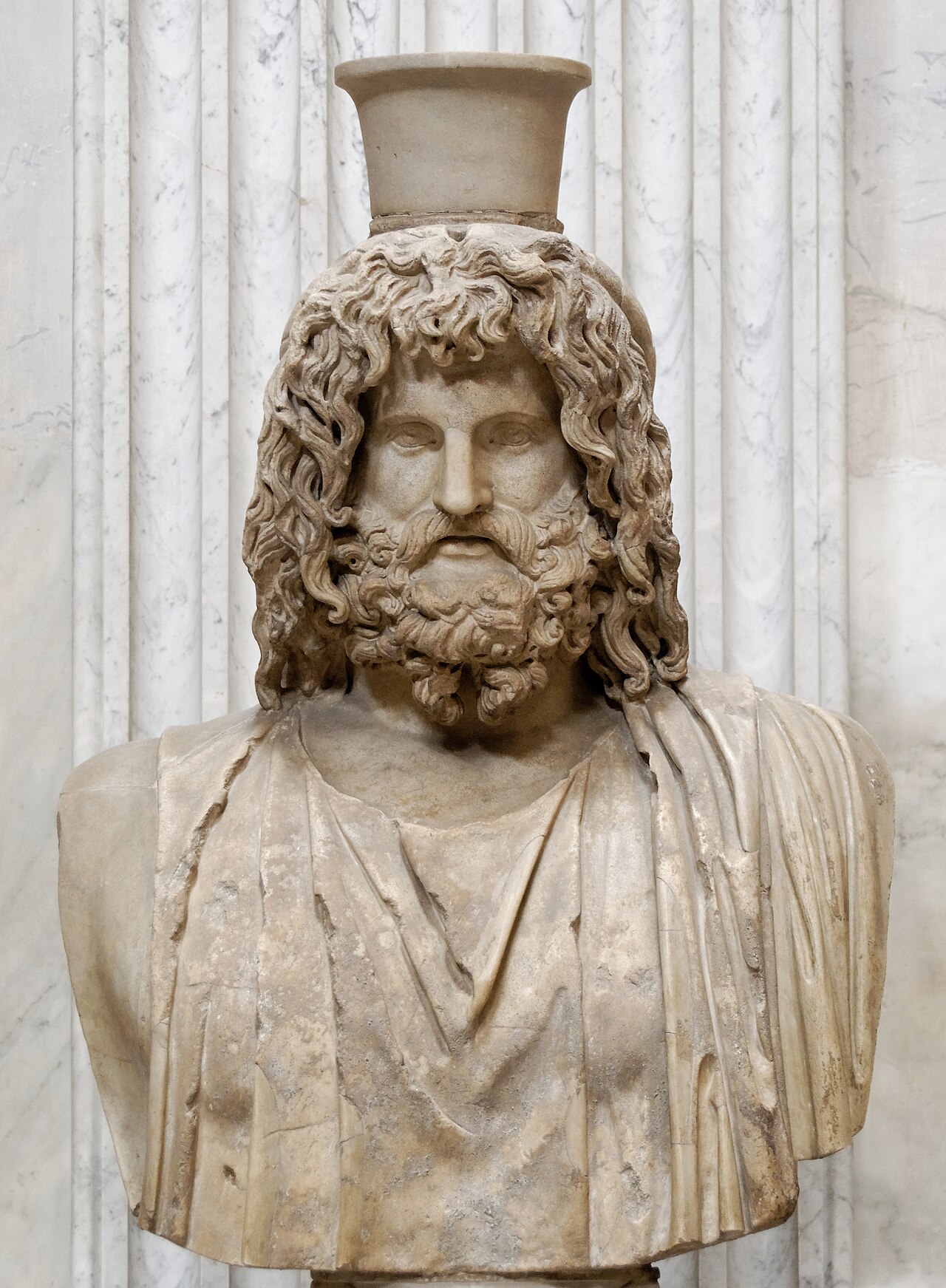
The Strategic Creation of Serapis
Ptolemy I Soter, a general of Alexander the Great, founded the Ptolemaic Dynasty and sought to establish a stable and unified kingdom in Egypt.
A Blend of Divine Attributes
Serapis was conceived as a composite deity, drawing heavily from the Egyptian god Osiris-Apis, who was associated with fertility, the underworld, and the cycle of death and rebirth. To appeal to Greek sensibilities, attributes of prominent Greek gods were incorporated into his persona. These included characteristics of powerful Greek deities associated with the underworld and sovereignty, as well as those linked to healing and agricultural abundance. This careful fusion ensured that Serapis resonated with the religious traditions and understanding of both major ethnic groups within the Ptolemaic kingdom, making him a truly universal deity for the era. His identity as Osiris in full, rather than just the Ka, emphasized his complete divine authority and presence.
Worship and Iconography
The cult of Serapis was centered in grand temples known as Serapea, with the most famous and influential being the Great Serapeum of Alexandria. This magnificent structure served as a focal point for religious life in the city and was a testament to the god's importance. Serapis was typically depicted as a majestic, bearded man, often seated on a throne, with a modius—a basket-like grain measure—on his head, symbolizing fertility and abundance. This iconography clearly reflected his dual nature, presenting a figure that was both recognizably Greek in form and deeply rooted in Egyptian concepts of the afterlife and agricultural prosperity.
Enduring Popularity and Influence
The popularity of Serapis extended far beyond Alexandria and the borders of Egypt. His cult spread throughout the Hellenistic world, reaching various parts of the Mediterranean and beyond. Later, under Roman rule, Serapis continued to be widely worshipped, with his cult gaining significant traction across the Roman Empire. Temples and shrines dedicated to Serapis could be found in numerous cities, illustrating the enduring appeal of this syncretic deity. His creation by Ptolemy I Soter proved to be a remarkably successful religious innovation, contributing to the cultural integration and stability of the Ptolemaic kingdom for a long period.

Registration successfull!

Your Registration is successfully done
Please Check Your E-mail to Confirm Your Account. Do not forget to open the spam folder.
 EUR


 Español
 English
 العربيه


