Arsinoe I: A Queen of Significant Political Influence
Arsinoe I and Early Ptolemaic Power
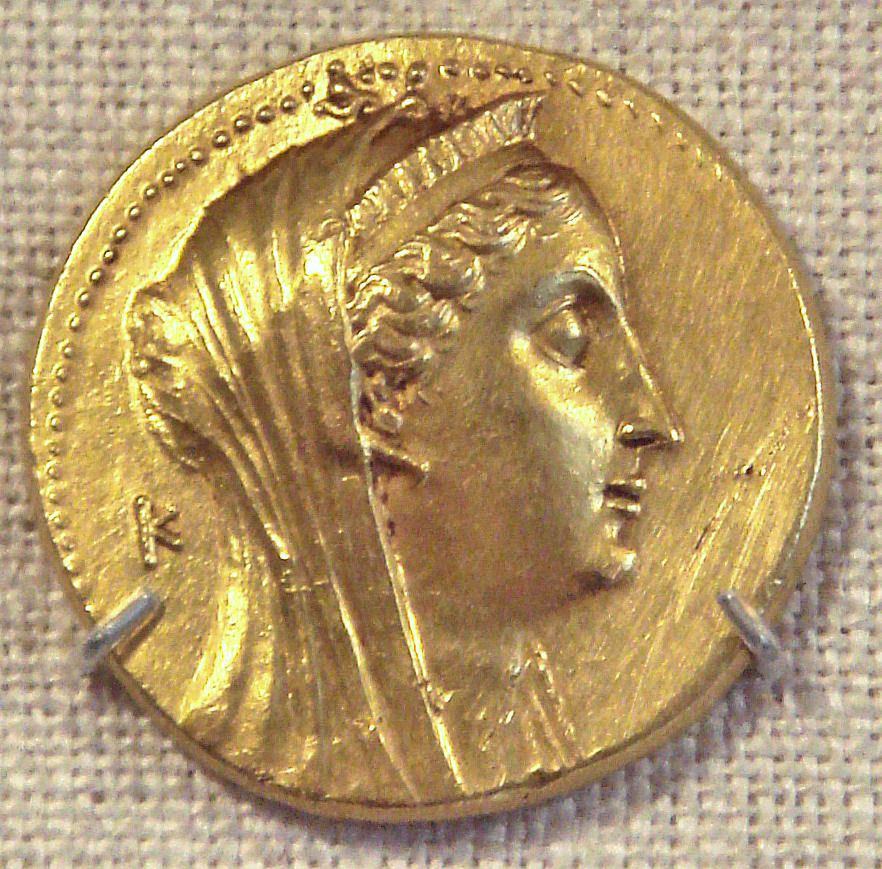
Arsinoe I was a prominent queen in Hellenistic Egypt, known as the wife of Emperor Ptolemy II and the mother of his three children. Her tenure as queen was marked by her assertive personality and her deep involvement in the affairs of the state. She represents a notable example of the significant political influence that royal women could wield within the Ptolemaic dynasty. The role of a queen in this era often extended beyond domestic duties to encompass political alliances, religious functions, and direct participation in governance. Her actions illustrate the complex interplay of personal ambition and dynastic politics in ancient Egypt. Ptolemaic queens frequently held considerable authority, sometimes even co-ruling or acting as regents. The marriage itself was a strategic alliance, typical of royal unions designed to consolidate power and secure succession.
Ambition and Court Intrigue
As a very domineering and powerful woman, Arsinoe I managed to control over the rule and interfere in the administrative affairs after marrying the aging emperor. Her ambition was a driving force in her political maneuvers. She notably instigated a plot against Agathacoles, who was the eldest son of Ptolemy I. Arsinoe I claimed that Agathacoles planned to kill his father, a serious accusation that could destabilize the royal family. Such accusations were not uncommon in royal courts where succession was a constant source of tension and rivalry. This claim led to Agathacoles' execution, a move that effectively removed a potential rival to her own children. This decisive action paved the way for her son to follow his father in the line of succession, demonstrating her strategic foresight and ruthless determination. The elimination of rivals was a harsh reality of dynastic politics, where the stakes for power were exceptionally high.
Exile and Legacy
Despite her initial successes in securing her family's position, Arsinoe I's political fortunes eventually turned. In 274 BC, she was accused of plotting against Ptolemy II himself. This accusation marked a significant shift in her standing within the court. The charge of treason against the reigning monarch was a grave offense, often leading to severe punishment. This made her exiled in Coptos, one of the nomes of Egypt, where she died. Exile was a common fate for those who fell out of favor with the ruler, often serving to remove a perceived threat from the political center. Coptos, located in Upper Egypt, was a significant administrative and religious center, but for an exiled queen, it represented a loss of power and influence. Her story highlights the precarious nature of power for even the most influential women in Hellenistic courts, where political allegiances could shift rapidly.

Registration successfull!

Your Registration is successfully done
Please Check Your E-mail to Confirm Your Account. Do not forget to open the spam folder.
 EUR


 Español
 English
 العربيه


