Ankh Sign
Found in the Tomb of Amenhotep II was a great corpus of grave goods. Amenhotep II, the seventh king of the Eighteenth Dynasty, ruled for nearly 30 years, during which he achieved military successes in the Levant; brought peace to Egypt together with its economic rewards; and expanded the building of monuments honoring the gods. The ankh appears frequently in Egyptian tomb paintings and other art, often at the fingertips of a god or goddess in images that represent the deities of the afterlife conferring the gift of life on the dead person's mummy. Additionally, an ankh was often carried by Egyptians as an amulet.
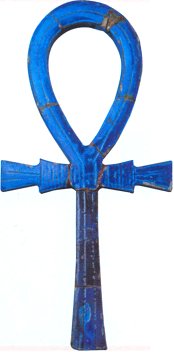
Made from turquoise faience, this piece of jewelry represents the hieroglyph for 'eternal life', ankh (known as the "key of life"). When first found by Victor Loret, this ankh sign had been shuttered into nine pieces, but it was later reassembled with some cracks visible. The ankh's ring is supported by two horizontal arms on a long leg.
Facts
- Material: Faience
- Size: height 42 cm, width 21 cm
- Found in: The Valley of the Kings, Tomb of Amenhotep II
- Discovered by: V. Loret
- Belonged to: Amenhotep Ii
- Reign of: Amenhotep II
- Dynasty: 18th Dynasty
- Period: Middle Kingdom
- Museum: Egyptian Museum, Cairo
Related

Registration successfull!

Your Registration is successfully done
Please Check Your E-mail to Confirm Your Account. Do not forget to open the spam folder.
 EUR


 Español
 English
 العربيه


