| ||
| ||
Nubia and Egypt
(1)
Nubia
through pre-dynastic ages .
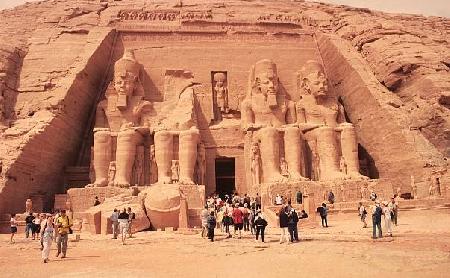
The earliest of the Nubian cultures (the A-Group and C-Group) were located in northern Nubia (lower Nubia) . Until recently it was thought that A-Group people were semi-nomadic herdsmen . However , new research suggests that a line of kings 1ived in Qustul in northern Nubia as early as , or perhaps even earlier than , the first pharaohs of Egypt . The people of these early cultures buried their dead in stone-lined pit graves , accompanied by pottery and cosmetic articles . At this time , Nubia was known to the Egyptians as "Ta Sety , " the "Land of the Bow , " because of the fame of Nubian archers . (2) Nubia during Old Kingdom . By Egypt's Old Kingdom , the Egyptians founded a settlement at Buhen which apparently was an important site for copper production . Later , Cheops opened diorite quarries in Lower Nubia especially in the site of Toshka fifty km north to the famous site of Abu Simbel . By the 5th dynasty 2500 BC , Egyptians began trading with the Nubia caravanning eastward through the Wadi Allgi one of the ancient valleys on the east bank of the Nile , or by the river Nile . . . Despite that Buhen settelment was abandoned in the 5th Dynasty and the diorite quarries near Toshka were closed , Egypt maintained its hold over Nubia in the late Old Kingdom . In the early 6th dynasty , Egyptians were recruiting Nubian mercenaries into the Egyptian army . Wenis recounts that he included five different Nubian peoples when he assembled the great army of king Pepi I( dynasty VI) for the military campaign to Canaan . He also led a major quarrying expedition to Ibhat southeast of the Second Cataract , and he built giant barges in Wawat , for which , he says , the rulers of Wawat , Irtjet , Yam and Medjay "dragged wood" (in token humiliation?) . Later he cut a series of channels through the First Cataract , after which King Merenra traveled to Elephantine in order to receive the homage of the Nubian leaders . Pepi IIprepared an expedition to sail to Punt in his reign , although it is uncertain that its preparations were completed . Apparently , the governors of Elephantine at this time were responsible for royal affairs in Nubia . Harkhuf recounts four successive expeditions on which he served or directed to Upper Nubia and Yam in the reigns of Merenre and Pepi II . He was a pathfinder , and his orders were to discover routes through the country and to trade with its leaders . While his earlier trips saw him traveling through Irtjet and Zatju along the river , in his later journeys , these territories had turned hostile to Egypt , forcing him to travel on desert tracts and through the western oases . On his return to Egypt , laden with goods , Harkhuf could only travel through Irtjet , Zatju , and Wawat with the added protection of forces of the friendly ruler of Yam . The change in the disposition of these territories was probably spurred by the arrival of a new people who gradually overtook Upper and Lower Nubia at this time and settled those areas . These were the C-Group people who were hostile to Egypt , and ultimately , they may have conspired to force Egypt out of Nubia at the end of the Old Kingdom , when the Egyptian state began to fragment and fall into civil war . Evidence indicates (e . g . , the account of Harkhuf) that at certain periods in the reigns of Merenre and Pepi II , the Upper Nubian chiefdoms of Irtjett and Zatju , as well as Wawat in Lower Nubia , united together under a single ruler . At some point , this C-Group union might even have included the Early Kerma culture , which was distantly related to the C-Group . Evidently , Yam stayed independent of this confederacy . The purpose of the union , undoubtedly , was to resist Egyptian penetration and colonization of Nubia . For that reason , the Egyptians led by Hekayib , Governor of Elephantine , launched a military campaign to suppress the C-Group , splitting Wawat from the confederacy and helping to stabilize Egyptian control of the region . However , the Egyptians were not able to pacify Nubia entirely , despite several military campaigns in the 6th Dynasty . Nubia remained resistive for the remainder of the Old Kingdom . Therefore , Sabni , Governor of Elephantine , recounts that he had to journey quickly to Wawat with an army to recover the body of his father , the previous governor , who had been killed on a trading mission . By 1550 BC kings at Kerma were ruling Nubia . They were buried in huge round tombs , accompanied by hundreds of sacrificed retainers . People of the Kerma culture were accomplished metal workers , and they also made thin-walled pottery on a wheel . This was a time of increased contact between Egypt and "Kush , " as Nubia was then called . Egypt dominated parts of Nubia from about 1950 to 1000 BC . Forts , trading posts and Egyptian style temples were built in Kush , and the Nubian elite adopted the worship of Egyptian gods and even the Egyptian hieroglyphic writing system . The gold , ebony and ivory of Nubia contributed to the material wealth of Egypt , and many of the famed treasures of the Egyptian kings were made of products from Nubia . By 800 BC Egypt had fragmented into rival states . In 747 BC , the city of Thebes the glorious capital of Egypt was threatened by northerners , and the Egyptians called upon the Nubian king for protection . The Nubian king , Piye , marched north from his capital at Napata , rescued Thebes and reunified Egypt . For the next 100 years , Nubian kings ruled both Nubia and Egypt . This era was brought to a close by the invasion of Assyrian armies in 663 BC and the Nubian king fled south to his capital at Napata . By 200 BC the capital had shifted yet farther south to Meroe , where the kings continued to be buried in pyramid shaped- tombs and to build temples to Nubian and Egyptian gods in a hybrid Egyptian Roman-African style . Roman historians record the skirmishes and treaties which marked the relationship of Roman Egypt and Nubia . By AD 250 the culture of Nubia changed radically , perhaps due to the immigration of new peoples into the Nile Valley . Pyramid tombs were replaced by the great tumulus burials of the kings of Ballana . These kings were laid to rest with sacrificed retainers , horses , camels , and donkeys . In the 7th century , Nubia was converted to Christianity . The skill of Nubian archers forestalled the conversion of Nubia to Islam until AD 1400 . Economic importance of Nubia for Egypt Nubia was a corridor to central Africa and a point for the trans-shipment of exotic goods from that region , so Egyptian interests in Nubia were always driven by economics . The one factor that chiefly characterized Egypt's relationship with Nubia through most of their history was exploitation . Nubian's most important resource for Egypt was precious metal , especially gold , incense , ivory , ebony , leopard skin , resin , and gum . The gold mines of Nubia were located in certain valleys and mountains on either side of the Nile River , although the most important mining center was located in the Wadi Allaqi . That valley extended eastward into the mountains near Qubban (about 107 km . south of Aswan) . Nubia was also an important source of valuable hard stone and copper , both of which were necessary for Egypt's monumental building projects . Trade Especially important for Egypt was the fact that including: frankincense , myrrh , "green gold , " ivory , ebony and other exotic woods , precious oils , resins and gums , panther and leopard skins , monkeys , dogs , giraffes , ostrich feathers and eggs , as well as pygmies (who became important to Egyptian religious rituals) . In the Old Kingdom , the Egyptians regularly penetrated as far as the Second Cataract to barter for these products which were coming down through the upper Nile Valley (viz . , the expeditions of Harkhuf , Hekayib , Mekhu and Sabni) . Man Nubia was also an important source of manpower and labor for the Egyptians . The Palermo Stone records that early in the 4th king Senefru led a military campaign into Nubia reputedly to crush a "revolt" there (the Egyptians considered all border's peoples , as "rebels" against the natural order) . According to that text , he captured 200 , 000 head of cattle and 7 , 000 prisoners , all of whom were deported to Egypt as laborers on royal building projects . While some archaeologists argue that this campaign was limited to Lower Nubia , others note that the amount of 7 , 000 is rather high for a country that was fairly depopulated at the time . If the number was not inflated as royal propaganda , then Snefru could have penetrated into Upper Nubia as far as the Land of Yam and made his conquests there . Today we remember the dramatic dismantling , transportation and reconstruction of the great temples of Nubia , now tourist attractions at their relocated sites at home and abroad . We tend to forget the specialized studies carried out by international experts who worked there between 1958 and 1971 , when the High Dam was completed , that cast light on Nubian's many cultures . So many blanks in the history of the region were filled in during those years that more is known about the indigenous cultures of Nubia than many archaeological zones in the world , even in Egypt . I recall the debate initiated on the relationship between Africa and Ancient Egypt when the Oriental Institute of Chicago's mission at Qustul made an unusual discovery . An incense burner was found in Nubia that dated to the dawn of history , 3100 BC or even earlier , and which caused great curiosity because of its engraving . It showed a seated ruler wearing what appeared to be the White Crown of Upper Egypt , a palace portal , and hawk-motifs that were later to become symbols of Pharaonic rule in Egypt . Some scholars saw this as proof that a pre-dynastic object had made its way from Egypt to Nubia , others as evidence that the kingship ideal originated in Nubia . The discovery , anyway , along with studies of various cemeteries in Nubia , modified future attitudes towards cultural heritage and , on the long run , gave rise to an Afrocentric outlook . It certainly appears that the long relationship , and inter-relationship , between Egypt and Nubia gave rise to a shared heritage , a unique experience that endured over the millennia . What is known as the A-group cemeteries found in Nubia represent its Neolithic culture of between 3500 and 2800 BC , and extended along the whole length of Lower Nubia and even beyond the Second Cataract about 200 kilometres south of Aswan . Archaeologists found thousands of graves containing a wide variety of pottery , leather garments , ostrich-feather fans , copper weapons and palettes of quartz , all of which indicated the level of civilisation reached by the Nubians . It was similar to , but different from , that of the Egyptians . However , after the unification of Upper and Lower Egypt the Egyptian culture advanced rapidly and Nubia was left far behind . The Pharaohs of the early dynasties (3050-2613 BC) made swift progress , and soon set their sights on Nubia's mineral wealth . The Pharaoh Djer left an inscription at the entrance to the Second Cataract showing that he had journeyed well into Nubia and , on the summit of a conical hill known today as Gabal Sheikh Suleiman , he left a record of a military expedition in his reign in which he captured two towns . The requirements of a highly developed civilization demanded raw materials and other products that were not readily available in Egypt , and these were imported from neighboring territories . Relations between the agriculturally impoverished but mineral-rich land of Nubia and Egypt actually developed early on . During the Pyramid Age (2613-2181 BC) Nubia's mineral wealth was actively exploited by Egypt's Pharaohs . At a copper-smelting settlement at Buhen , royal names on mud seals included those of the Pharaohs Khafre and Menkaure of the Fourth Dynasty , and Userkaf , Sahure , Neferirkare and Djedkare of the Fifth . The Nubians resisted the exploitation , but when they discovered that they could neither drive off nor kill the intruders they finally awoke to the advantages of trade . Egyptians satisfied their mineral requirements and opened markets even further south , resulting in the acquisition of such valued commodities as ivory , ebony , ostrich feathers , panther skins and gums , while in exchange the Nubians were provided with Egypt's agricultural surplus , including grain , oil and honey . An interesting and important observation made by missions working in Nubia in the 1960s was an apparent attempt by the early Pharaohs to control Lower Nubia by creating centers of permanent occupation , even as far south as Kerma , the gateway to the vast riches of the inner Africa . One of the most rewarding archaeological concessions , and one that identified thousands of sites in Nubia from pre-dynastic times through to the Christian era , was that of the Scandinavian joint expedition comprising Denmark , Finland , Norway and Sweden , under mission head Torgy Save- Soderbergh of Uppsala University . Through the mission's excavations at Debeira , on the east bank of the Nile north of Wadi Halfa , it was possible to trace the mysterious C-Group culture from its development to its unexplained extinction more than a thousand years later . It appears that between 2300 and 1500 BC , simultaneously with the disintegration of Egypt into warring city states during the so-called First Intermediate Period after the fall of the Old Kingdom , a pastoral people known as the C-group emerged in Nubia . The standard of their pottery and other objects in their cemeteries reveals a more advanced standard of culture than the earlier A- group . They appear to have been sedentary cattle owners , perhaps descendants of cattle-breeders who roamed around the Sahara desert and who drifted towards the Nile Valley when conditions became difficult due to increasing desertification . These people were probably responsible for the thousands of drawings of cattle on the rocks of Nubia . Indeed , cattle were frequently buried around their graves , and the long horns of cattle decorated their pottery . Save-Soderbergh long believed that there was a connection between the Egyptian fortresses at the Second Cataract and the C-group people , who were first buried in shallow graves surrounded by stone rings but later built more elaborate stone- lined chambers in the middle of a round stone structure complete with chapel . He concluded that they were the very people whose presence represented a threat to Egypt's Middle Kingdom Pharaohs and inspired them to build vast fortifications to protect their interests . Indeed , the Middle Kingdom Pharaohs (2122- 1786 BC) were so anxious to keep their trade routes open and secure that Amenemhet I built a fortress in the Second Cataract region at Semna; Amenemhet II established a trading post as far south as Kerma; and Senusert III fixed the southern frontier of Egypt at Semna , just above the Second Cataract . The great fortresses of Mirgissa , Semna , Buhen and Uronarti were constructed on natural elevations . According to Sir Alan Gardiner on the basis of a papyrus found at Thebes , which recorded the names of Egyptian fortresses , no fewer than eight were constructed in this region , a testimonial to the solidarity of Egyptian control of its southern possession . In short , Nubia was colonized by Egypt . Unlike barren Lower Nubia , Upper Nubia or Kush (northern Sudan) was fertile and rich in natural resources . Its people , the Medjay , were vigorous and courageous and strongly resisted Egyptian occupation . They were finally suppressed by Pharaoh Senusert III . His army was aided by friendly Nubians -- frequently recruited for the Egyptian army -- who celebrated the victory by turning Senusert into a national hero . A temple was built in his honour , and became the focal point of a flourishing Egyptian community . Generation after generation of Egyptian soldiers and settlers lived in Nubia , slowly spreading Egyptian traditions , technological skills and religious beliefs . Through their domination of the region , Egyptians were not only assured of the fruits of this great gold and copper-producing country , but were furthermore in an ideal position to trade for other prized commodities further south . The Egyptian fortresses of Nubia served as symbols of Egyptian military power , but they were also depots for imported materials . This lasted until the Hyksos occupation of Egypt , when many were burned or abandoned . One archaeological team has gone a long way towards solving a long-standing puzzle: why the military commanders of the Middle Kingdom chose a dangerous stretch of the Second Cataract to construct their fortresses . This was solved at Marisa fortress by a mission under the direction of the French scholar Jean Vercoutter . When Vercoutter arrived at the site the massive fortification was covered by sand drifts , and for five consecutive years his expedition worked to clear the area . They were finally rewarded in 1964 when , in the upper fort , they found what is regarded as the single most important object ever found at the site . It was a wooden stele , which bore a text "Hathor , Lady of Ikn" . It confirmed Vercoutter's conviction that Mirgissa was the long-sought Egyptian entrepot in Nubia , ideally situated for trade , where a popular Egyptian goddess was worshipped by the Egyptian community . Fired with enthusiasm , the mission subsequently surveyed the desert for miles around . They studied the river bank in search of a harbor , docks , and perhaps warehouses . After clearing one small , partly plundered cemetery the mission decided to excavate the whole necropolis , and this resulted in a rare discovery . They found a cache of some 3 , 000 "execration" texts , that is to say fragments of pottery bearing the names of many of the people regarded by the Egyptians as enemies . Not far distant , four deliberately broken statuettes of prisoners were discovered , as well as a human skull laid on a dish , and nearby were a flint knife and a broken pot . The discovery of the texts , with lists of foreign countries and peoples in Asia and Africa , has already enriched the study of magical rites associated with foundation deposits of temples in Egypt and Nubia . The Middle Kingdom came to an end with the Hyksos invasion , and during the period of decline from the XIIIth to XVII dynasties (1786-1567 BC) , Lower Nubia took advantage of Egypt's weakness and regained its freedom . By the time the Hyksos were finally expelled by a powerful Theban family which founded the XVIII Dynasty , the Pharaohs had to re-establish a presence there . The New Kingdom (1567-1080 BC) was marked a period of substantial imperial expansion in western Nubia and Kush . Ramses II , the most prolific of temple builders , constructed many temples in Nubia between the First Cataract at Aswan and Second . From north to south , they were located at Beit Al-Wali , Gerf Hussein , Wadi As-Sebua , Derr , Abu Simbel and Aksha . Each of these temples , saved from inundation and now tourist attractions , had a sizable community to support it and , in their original positions , had several features in common . Initially a series of free-standing statues led from the banks of the river to the cliff face , into which the temple was cut . Their location in relation to the river , along with the resident communities , indicates a shift from occupation with military garrisons housed in great fortresses to a life of peaceful trade and commerce . Egypt's technological skills and religious traditions were introduced deep into Nubia . Its influence gradually spread southwards to the Fourth Cataract , and between 1000 and 300 BC Napata was yet another Egyptian settlement . So in the confusion that followed the death of the high priest Hrihor , who had usurped the throne of Egypt and declared himself to be ruler of Upper and Lower Egypt -- although the Delta was actually ruled by a strong family in Tanis , and divided rule meant weakened rule -- Kush seized the opportunity to become increasingly independent . At last it was a time of glory for Egypt's southern neighbour . Liberated from Egyptian domination , the Kushites set up an independent kingdom at Napata . It was African in origin but Egyptian in tradition and religious belief , and a Pharaonic- style court was installed . Egypt's "great god" Amun-Re was worshipped in a temple built near Gabal Barkal , a sacred mountain near the Fourth Cataract , and the kings styled themselves with Pharaonic titles . They were proud and ambitious , and when they observed the slow deterioration of the Egyptian government the Kushite King Piankhy (730-663 BC) was encouraged to move northwards into Egypt . With a strong army , Piankhy marched northwards , not as an invader , since his people had long absorbed Egyptian culture , but as a liberator . He regarded himself as a true Pharaoh , bound to free Egypt from the forces of barbarism and re- establish lost virtues . The Kushite Dynasty in Egypt , the XXV , lasted from 750-656 BC , and Piankhy and his descendants were able to bring about internal stability such that they built temples and revitalised society . How long they might have remained on the throne of Egypt is difficult to say , but with the Assyrian march on the Delta in 671 BC they were driven back to their own land where , at Napata , their kingdom prospered until about 600 BC . Why the Napa tan rulers decided to move their capital further south , to Meroe (Shendi) is not clear . Nevertheless there , in a fertile bend in the river , free from invasion and well placed for trade , in an area rich in iron ore and in wood for iron-smelting , they developed a culture that was at once a continuation of the Egyptian-influenced Napatan culture and a totally individual African culture , the Meroitic . Egyptian influence was strong in Meroitic religion and art , and the kings and queens were buried in pyramids at Meroe . The Meroitic language is still not fully understood . While Egypt succumbed to two Persian invasions (in 525 and 345 BC) the Meroitic Empire flourished and slowly expanded through northern Sudan and Upper Nubia . By the reign of Ptolemy IV (222-204 BC) , the Meroitic King Argamanic controlled the Nile to within sight of Elephantine Island . Relations between Nubia and Ptolemaic Egypt were good , but the situation changed when the Romans occupied Egypt in 30 BC . The Meroites and Roman authorities came into conflict over the control of Lower Nubia , especially when nomadic tribes from the Western Desert increasingly disrupted the lives of Nile Valley communities and interrupted trade . Eventually a peace treaty was signed , turning all of Lower Nubia into a buffer zone . Despite the alliance , however , there was continued conflict between the proud and independent Meroites and the Roman garrisons in Egypt . On one occasion the Meroites defeated Caesar's soldiers and actually occupied Aswan . They did not stay long . The Roman army drove them out and they returned to their own land , where their kingdom already showed signs of disintegration . Between the mid-fourth and mid-sixth centuries AD , a new X-group , or Ballana culture , emerged in Nubia . Its origin is of doubtful origin and is the subject of controversy among scholars . Some are of the opinion that they were the troublesome people known to the Romans as Blemmyes , a warlike tribe of the Eastern Desert . Others identify the X- group with a people known as the Nobodai , who migrated into Nubia from western Sudan . The tombs of the kings found by British scholar Walter Emery in the 1930s contained the richest grave goods ever found in Nubia , now in the Nubia Museum at Aswan . They include silver crowns inland with semi-precious stones , bronze and silver vessels , jewellery , weapons and furniture . Servants were buried in the tombs , as well as animals including horses with saddles and harnesses elaborately decorated with silver . Only slowly did Nubia accept the Christian faith . From 550-1500 AD three Christian kingdoms were established along the Nile between modern Khartoum and Aswan , with Faras as capital of northern Nubia . The Nubian population increased and prospered . Many churches were built and some temples were converted into churches . In 652 , as the Arab empire expanded , a treaty was drawn up between the Muslim rulers and Nubian Christians which resulted in good relations for some 500 years . However , the fortunes of Christian Nubia eventually declined as it came more and more under the control of Islam . In the 14th century a bishop was enthroned as Qasr Ibrim , but Christianity by that time lingered on only in pockets which further decreased with the passage of time . Clearly the material remains of Nubian culture were not individual and isolated as previously supposed , but form an almost continuous development , while the function and purpose of Egypt's great monuments in Nubia are more than architectural and artistic masterpieces . Related Articles ..
|
Users Contributions
|