Geography of Nubia

Geography , we may say , is partly discovered and partly invented , but for a given community the geography is considered as a sort of familiarity , a part of the identity of a given population . Every inhabited region is also a landscape of the mind of that population who has always a different interpretation of that of the intruders .
The same concept is to be applied on the history of those inhabitants; the history of this community is the record of events registered by the observers of the community all the generation long .
These considerations are applied clearly to the case of geography and history of the Nubians , the record source of the Nubian history came basically by the Egyptian history record and very few of the Greek and bible writings . And there also at least incipiently an indigenous Nubian image of Nubia and its peoples involving its own set of biases , and that we will discuss in the coming pages .
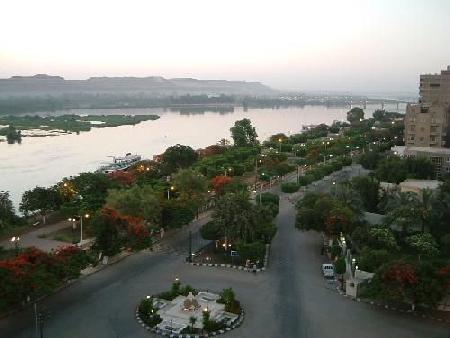
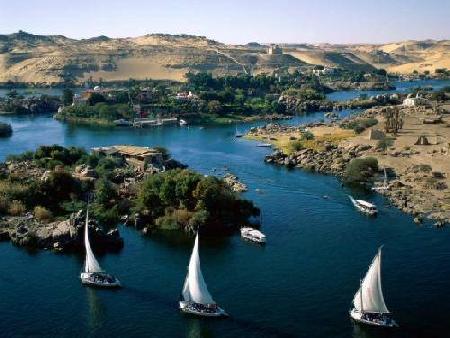
There is no a modern political entity called Nubia . The area known by this name lies today partly in Egypt and partly in the Republic of Sudan . A large portion of the northern part of ancient Nubia currently lies submerged under the reservoir formed behind Egypt's High Dam at Aswan . The following information describes the geographic and topographic area as it existed before the construction of the High Dam , the reason that thousands of Nubians from the north were forced to relocate from their endangered homelands to be resettled in Egypt and Sudan , so the major part of the land of Nubia was covered by the dam water . For the ancient Mediterranean world , the land to south of Egypt was a land of mystery and legend . The land of the riche and exotic products coming from the black people . It is the home of the Nubians , whom Greeks called the Ethiopian . This land , which now sited between Egypt and Sudan , is a land of vast distances , and its exploration was long hampered by transport problems and political disturbances all the history long . In the last hundred years , Nubia has been given its secrets slowly; their people missing , abandoned cities and lost their kingdoms after the construction of the Aswan High Dam .
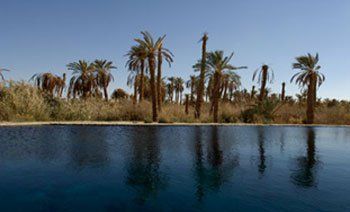
The land of Nubia is a desert , fragmented by the River Nile . Due to the lack of water and poor soil , most of Nubia has never been able to support large populations over long periods . However , some of the greatest civilizations of Africa came here , centers of achievement whose existence was based on industry and commerce .
In ancient times , however , the Nubian landscape became well known for others , more exotic resources that attracted the attention of neighboring countries , particularly Egypt . Materials commonly exported from or through Nubia were gold , ivory , and ebony . Some of these materials actually originated in areas south of Nubia , so Nubia served as a corridor for trade . Sometimes the Egyptians controlled this trade , so it was only when the Nubian's were able to serve as middlemen that Nubia itself profited from these resources
    More Articles ..


 the door of El Banat Mosque with attractive geometric shapes and islamic carvings


Map of Egypt
Map with coordinates, satellite images, zoom, attractions in Egypt   >>

Sightseeing in Egypt
Attractions, monuments, temples, restaurants, museums, sqaures, archelogical sites, and more in Egypt   >>

All Attractions of Egypt
A list of all attractions and monuemnts in Egypt   >>

Photo Gallery for Egypt
A nice photo gallery of special photos and photos sent by users about Egypt   >>

Current Weather in Egypt
Check weather state, dew, wind, cloud and temperature in Egypt   >>