The Blue Mosque of Cairo: Shams El-Din Aqsunqur and Iznik Tile Influence
A Prince's Mosque in Darb al-Ahmar
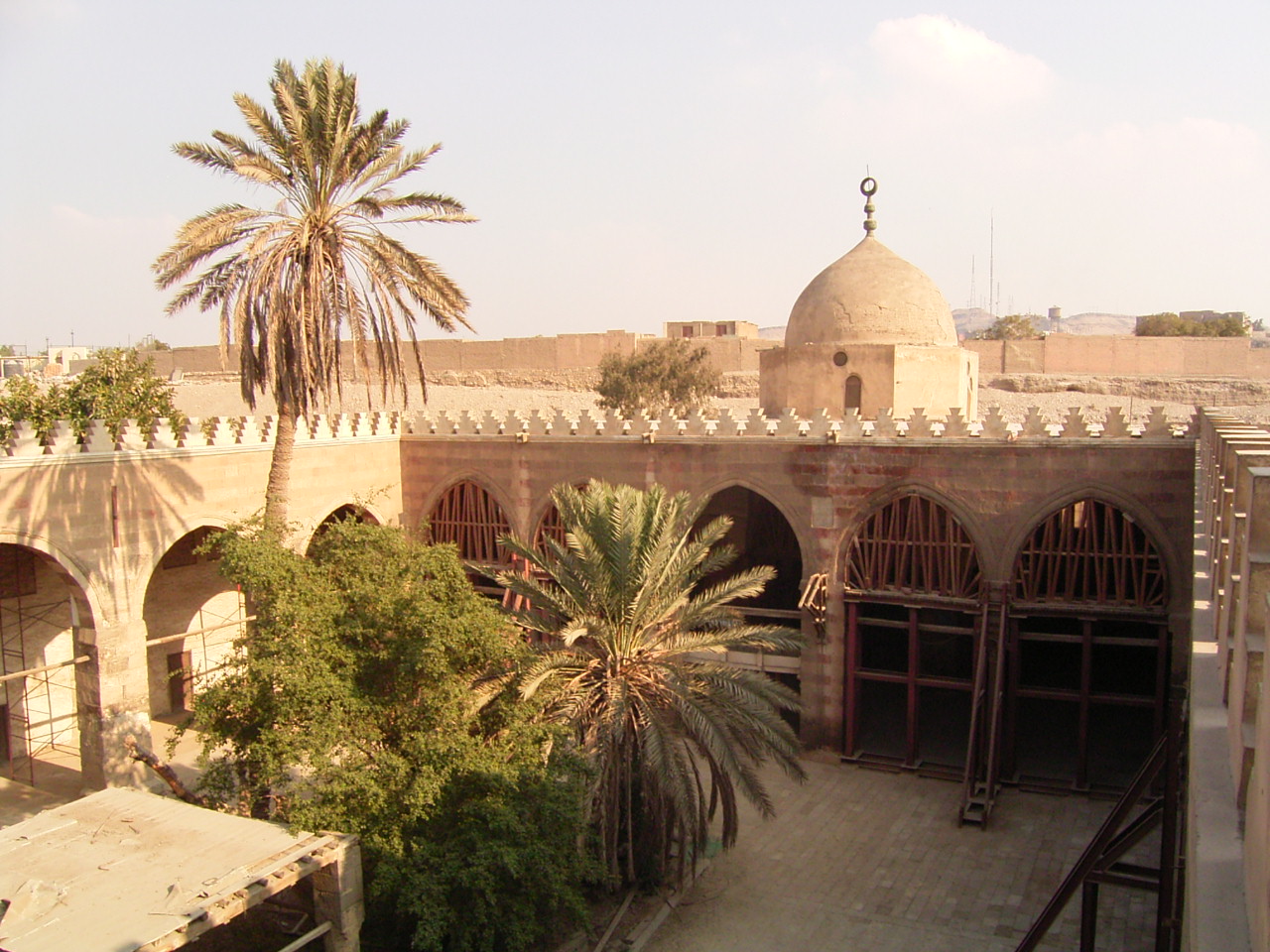
Emir Shams El-Din Aqsunqur rose to prominence as a senior nobleman in the Bahri Mamluk court and secured his position by marrying a daughter of Sultan al-Nasir Muhammad. His mosque, erected in the mid-fourteenth century on Bab al-Wazir Street in the historic Darb al-Ahmar district, stands as a rare Cairo example of Iznik tilework imported from Anatolia. The building earned its popular name, the Blue Mosque, from the dense bands of blue-and-white ceramic revetment that cover its interior walls, a decorative program added later by the Ottoman-era patron Ibrahim Agha. The structure combines a compact hypostyle plan with a distinctive arcade of slender circular columns, a feature uncommon in Cairene mosques of the period. Its mihrab, framed by geometric marble inlay and carved stucco, exemplifies the refined Mamluk decorative vocabulary that balanced calligraphy, arabesque, and structural clarity. The complex also houses the tombs of Aqsunqur himself and one of Sultan al-Nasir Muhammad's sons, linking the monument directly to the royal lineage.
Political Rise and Sudden Fall
Aqsunqur's career followed the volatile trajectory typical of the Mamluk elite. After his marriage alliance with the ruling house, he participated in a conspiracy against Sultan al-Kamil Sha'ban, a move that led to his condemnation and execution shortly after the mosque's completion. The speed of his downfall left the building without its founder's long-term patronage, and subsequent rulers repurposed or neglected the site. Despite this, the mosque survived the political churn that erased many contemporary foundations, preserving a snapshot of mid-fourteenth-century architectural taste.
Iznik Tiles in a Cairene Setting
The blue tiles that define the mosque's identity arrived decades after its construction, reflecting the growing Ottoman aesthetic influence in Cairo after the 1517 conquest. Iznik workshops, famed for their cobalt-blue palette and floral motifs, supplied ceramics to imperial projects across the empire; their appearance in a Mamluk-era mosque illustrates the cultural continuity and adaptation that characterized the early Ottoman period in Egypt. The tile panels cover the qibla wall and mihrab surround, creating a luminous surface that contrasts with the sober stone arches and the original stucco decoration. This layering of styles makes the building a physical record of successive artistic regimes.
Restoration and Present Condition
By the late nineteenth century the mosque had fallen into partial ruin, its roof collapsed and its tilework damaged by damp and neglect. The Comité de Conservation des Monuments de l'Art Arabe undertook a systematic consolidation in 1908, stabilizing the arcade, repairing the mihrab, and protecting the surviving tile panels. Modern conservation efforts continue to address rising groundwater and salt crystallization, threats common to monuments in the dense urban fabric of Darb al-Ahmar. The mosque remains open to visitors, offering a quiet counterpoint to the more frequented sites nearby.
Visiting the Blue Mosque Today
The entrance on Bab al-Wazir Street leads directly into the courtyard, where the circular columns and tiled qibla wall can be viewed at close range. The surrounding neighborhood retains its medieval street pattern, with nearby monuments such as the Mosque of al-Maridani and the Palace of Amir Taz providing context for the area's architectural density. A visit here rewards the curious traveler with a tangible sense of how Mamluk foundations were reshaped by later Ottoman taste, all within a single, half-ruined yet resilient sanctuary.

Registration successfull!

Your Registration is successfully done
Please Check Your E-mail to Confirm Your Account. Do not forget to open the spam folder.
 EUR


 Español
 English
 العربيه


