Pharaoh Thutmosis IV

Thutmosis IV was the son of Amenhotep II and Tiaa .
He had a stela set up between the paws of the Great Sphinx at Giza to commemorate an unusual act of piety on his part . The Sphinx was then regularly covered in sand from the desert , which the wind blew up against its body day after day . It happened that the young prince loved to go hunting on the Giza Plateau and one day he was sleeping in the shadow of the Sphinx , and god Rehorakhty appeared to him in a dream asking him to clear up the sand around the Sphinx , and if he did so , he would be rewarded by the Crown of Upper and Lower Egypt . Thutmosis cleared the sand away from the god , and in return , the Sphinx granted him the throne .
His reign lasted for only 8 or 9 years . He died at the age of about 30 .
He undertook the construction at most of Egypt's major temple sites and at four sites in Nubia . He also added to the existing temples . He continued the construction of a temple dedicated by Amenhotep II in the vicinity
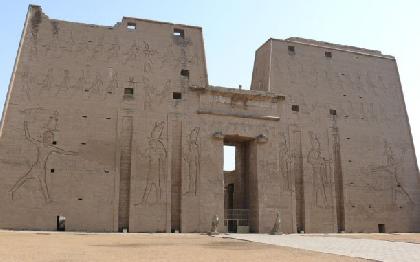
of the Sphinx . Monuments of his reign have been found at the following places: in the Delta at Alexandria , and probably at Heliopolis , in the Memphite Region at Giza , Abusir , Saqqara , the city of Memphis itself , in the Faiyum at Crocodilopolis , in Middle Egypt at Hermopolis and Amarna , in Upper Egypt at Abydos , Dendera , Medamud , Kamak , Luxor , western Thebes (where he built a mortuary temple and a tomb KV 43 in the Valley of the Kings) , Armant , el-Tod , El-Kab , Edfu , and Elephantine . In Nubia , he left blocks at Faras and Buhen . He decorated the peristyle court at Amada , and left a foundation deposit at Gebel Barkal , and left another foundation deposit containing his cartouche in the Temple of Ptah at Memphis . In addition , some decoration was carried out in the Hathor Temple at the Serabit el-Khadim .
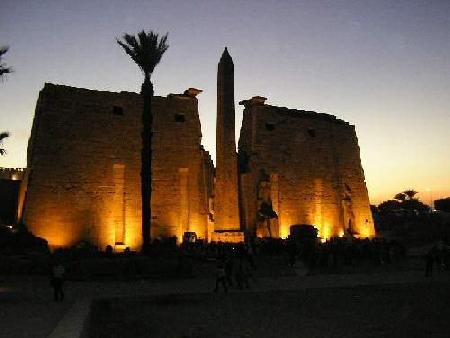
At Karnak , the King shifted the main axis back to east-west . He made some alterations to the fourth pylon . The King also erected a single obelisk at the
eastern end of the precinct at Karnak . It had been produced for Thutmosis III but left in the workshop for 35 years until Thutmosis IV ordered it to be set up . It became a focus of the Solar Cult place designed by Thutmosis III , and it was placed directly on the temple axis .
As for the King's foreign policy in the East , his contacts with Mitanni are best considered in the context of the pre-existing peace with that power . Thutmosis IV took a daughter of the Mitanni ruler , Artatama , as wife , in order to seal a diplomatic relationship with the King . The best-known inscription noting military activity for Thutmosis IV is a text on a statue at Karnak that gives the name of a site (partly missing) , the site is either Sidon or Qatna in the Northern Levant . In the southern regions of Palestine , Thutmosis can only be said to have taken punitive actions against Gezer , actual war can not be proven , but some of the population of this town were transported to Thebes .
As for the areas south of Egypt , there is no clear attestation of Thutmosis IV's military activity in Nubia . A stela carved on the rock south of Aswan gives a
record of a journey by Thutmosis IV over the gold mine routes east of Edfu . It is very likely that the Nubians were interfering with gold transports , attacking from hiding places in the high desert where the mines were located .
Thutmosis IV increasingly emphasized divine associations of royal females . He placed his mother in the role of 'God's Wife of Amun' . This was her primary role , although Tiaa also held the titles of 'King's Mother' and 'Great Royal Wife' during most of Thutmosis IV's reign . Tiaa appears in the Karnak jubilee court of her son , where she holds a mace while witnessing the monument's foundation ceremony . [In Amenhotep II's jubilee pavilion , Merytre (name later changed to Tiaa) was shown likewise holding a mace and a sistrum in her other hand] . The mace became a standard iconographic element of the 'god's wives' later on .
A non-royal wife , Nefertiry , attested in Giza and the Luxor Temple , was 'Great Royal Wife' alongside Tiaa during the earlier years of rule . Later , after Nefertiry had apparently either died or been set aside , Thutmosis IV followed the trend of his family and married a sister , whose name may be read as Iaret . Amenhotep III's mother , Mutemwiya , was never acknowledged by Thutmosis IV either as major or minor queen , but a statue of Amenhotep's Court Counselor , the Treasurer Sobekhotep shows the prince Amenhotep in a favored position before his father's death . The tomb of Amenhotep's royal nurse , Hekameheh (TT 64) also shows the young heir , but since the tomb was completed in Thutmosis IV's reign , Mutemwiya does not appear . Several other princes are mentioned in texts in Hekarneheh's tomb , but it is not clear whether these are sons of Amenhotep II or Thutmosis IV .


the-egyptian-museum  statuette-of-a-hippopotamus-


Map of Egypt
Map with coordinates, satellite images, zoom, attractions in Egypt   >>

Sightseeing in Egypt
Attractions, monuments, temples, restaurants, museums, sqaures, archelogical sites, and more in Egypt   >>

All Attractions of Egypt
A list of all attractions and monuemnts in Egypt   >>

Photo Gallery for Egypt
A nice photo gallery of special photos and photos sent by users about Egypt   >>

Current Weather in Egypt
Check weather state, dew, wind, cloud and temperature in Egypt   >>